
English learning at home
10 English Worksheets for Kindergarten Kids Love
Discover 10 practical English worksheets for kindergarten beginners, plus parent tips, simple home activities, and a gentle audio-led practice option.
By Talkio Kids ·
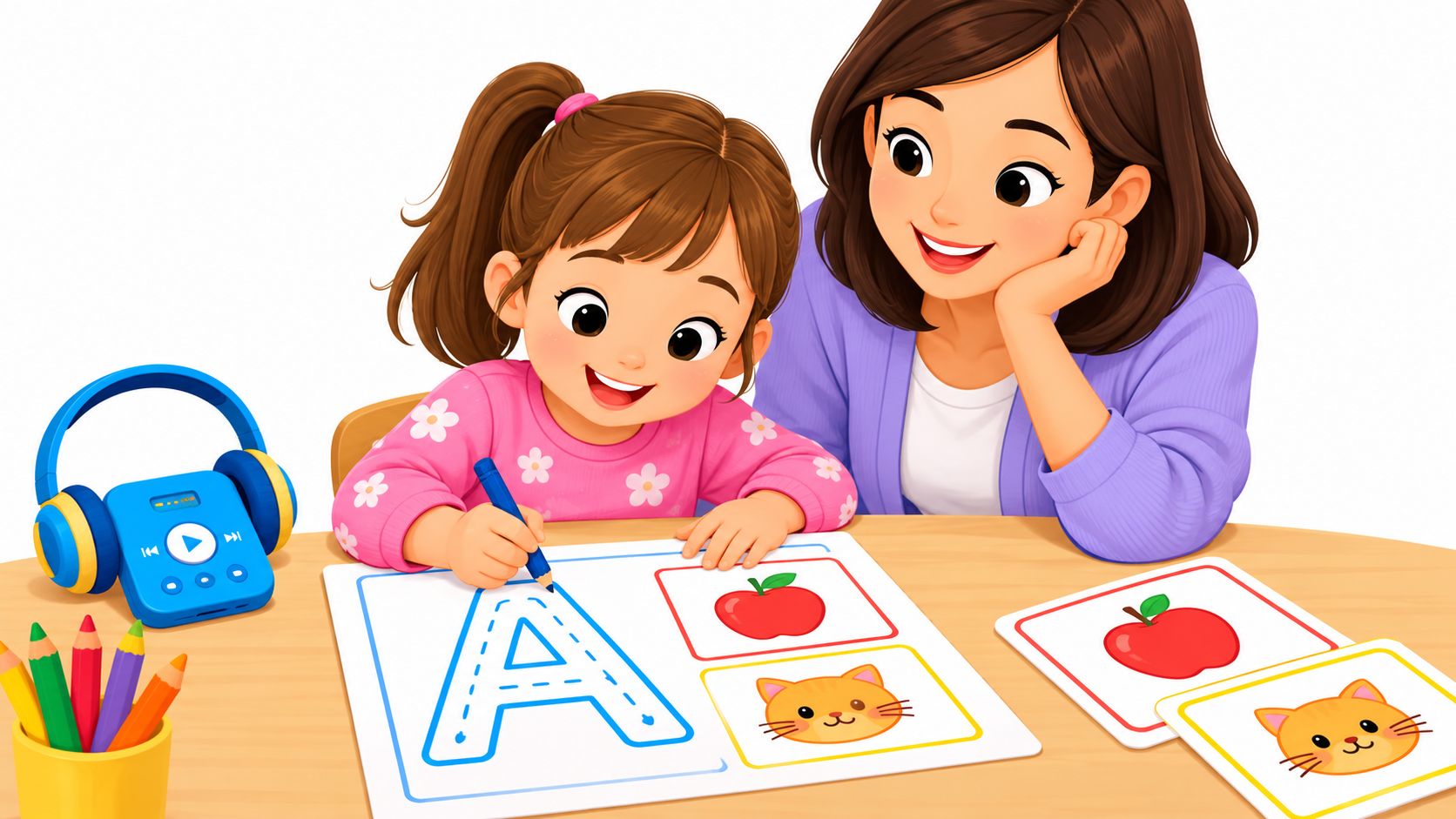
A parent prints a cheerful worksheet, sets out some pencils, and sits beside a child ready to learn English. Then the problem appears: the child can't read the instructions, doesn't know the pictured objects in English, and has no idea which word to circle. A page that looked simple suddenly needs a whole lesson before the pencil touches the paper.
Many kindergarten worksheets assume children already understand spoken English and are learning to read their familiar language. A complete English beginner needs a different starting point, with pictures, spoken words, and a clear demonstration before independent reading or writing.
That applies to older children, too. A child aged 9–10 may read confidently in a home language while knowing almost no English. Kindergarten-level language can suit that learner, but babyish pictures and repeated alphabet tracing might not.
Practical rule: Choose a worksheet by the English it requires, not just the grade printed on it.
These places to find English worksheets for kindergarten serve different needs. Some suit picture-first practice, some help with focused phonics, and others need an adult to select and sequence materials carefully.
The strongest starting point is a page a child can understand after hearing the words and watching an example. Parents don't need to print a large pack. A familiar topic, a manageable task, and an opportunity to say something aloud make a more useful beginning.
1. Twinkl
Choose Twinkl for picture-supported materials and a broad choice of activity formats. Its kindergarten English language arts collection covers phonics, reading, writing, comprehension, and speaking and listening, alongside visual aids and activity packs.
That breadth makes it useful when a child needs something other than another tracing page. Parents can look for picture matching, body-part labeling, or familiar-object vocabulary before moving toward printed sentences. Ratings and review counts offer another selection cue, although the worksheet preview matters more than popularity.
A sensible starting point
For a child who doesn't read English yet, a picture-labeling activity provides a practical opening. An adult can name a pictured hand, point to a real hand, and invite the child to do the same before introducing the printed word.
- For younger beginners: Choose clear pictures and a task that can be demonstrated without reading the instructions.
- For older beginners: Look for useful topics such as home, weather, or classroom objects rather than choosing by decorative style alone.
- For tutors: Select related visual aids and worksheets so spoken practice and paper practice use familiar vocabulary.
The drawback is selection work. The large catalog can make it tempting to download far more than a child needs, and some resources require an account or paid access. Twinkl suits adults willing to preview materials and build a small, connected sequence rather than expecting every kindergarten page to suit a complete beginner.
2. K5 Learning
A child who recognizes pictures but struggles with beginning sounds needs focused practice, not a mixed workbook. K5 Learning's preschool and kindergarten worksheets organize letters, phonics, vocabulary, comprehension, and early writing into topic-based collections.
The clear categories make this a practical choice when a parent already knows the skill to practise. Printable flashcards also offer an alternative to writing, allowing an adult to show a picture, say its name, and ask the child to find it again.
Keep meaning ahead of pencil work
A beginning-sound worksheet isn't automatically beginner English practice. Before asking a child to match a letter to a picture, an adult should establish the English name of that picture. Otherwise, the child may understand the object perfectly but use a different word for it in the home language.
For an older beginner, parents can separate handwriting from vocabulary. A learner who already writes comfortably can point, match, and say the word instead of tracing letters repeatedly.
- Strength: Many worksheets are free, and topic categories make targeted practice straightforward.
- Limitation: The free browsing experience includes ads, while additional materials require membership or a workbook purchase.
- Home activity: Introduce the pictured objects aloud, complete the matching task, then find similar objects around the room.
The guide to teaching a child English at home provides a broader framework for fitting a worksheet into playful family practice. K5 Learning works best as that routine's focused paper component, not its entire spoken-English lesson.
3. Education.com
Choose Education.com when a parent wants to search by both grade and topic. Its kindergarten worksheet search includes phonics, vocabulary, and early-reading materials, although broad searches can also return activities that aren't directly relevant to English learning.
The useful distinction is between a worksheet's subject and its reading demands. A page about animals may look suitable for a beginner but still require sentence reading, unfamiliar instructions, or written answers.
A worksheet is manageable when the child can understand the task after a demonstration, even if an adult still supplies the English words.
Preview the response the page expects
Before printing, parents should inspect what the child must do. Pointing to a picture, choosing a word, completing a sentence, and answering a comprehension question require different levels of English.
For a younger learner, a picture-supported page can become a listening activity before any writing begins. Guidance on English lessons for children aged 6 can help parents connect that paper task with an age-appropriate routine.
Older beginners need the same language scaffolding without automatically receiving younger-looking activities. Parents can choose a theme that matches the child's interests, read the instructions aloud, and let the child complete the reasoning independently.
The main weakness is the need to filter carefully. Download limits and access requirements vary, so parents should inspect availability before planning around a particular resource. Education.com is a useful supplementary library for families matching home practice to a current topic, but it isn't a ready-made sequence for every English beginner.
4. Super Teacher Worksheets
Super Teacher Worksheets suits adults who print regularly and want varied literacy materials in the same library. Its printable resource collection includes reading comprehension, spelling, handwriting, grammar, and seasonal activities for home, homeschool, and classroom use.
For complete beginners, those categories need careful handling. Grammar pages and reading passages can demand more spoken vocabulary than a child currently has, even when the printed grade seems appropriate. A short, visually clear handwriting or word-matching task may be a better starting point.
Use a sample before committing
Some worksheets are available free, while membership provides broader access. Parents should use available samples to judge picture clarity, instruction length, writing space, and how much adult explanation the child needs.
- Useful for: Families and tutors seeking printable follow-up across several literacy skills.
- Less suitable for: Children expected to work independently before they understand the page's English.
- License consideration: An individual membership isn't the same as shared school-building access.
At home, an adult can turn a spelling or vocabulary sheet into a spoken sorting game. The child hears a word, finds the matching picture, and places it beside a related household object before attempting the written task.
For an older beginner, this approach preserves a worthwhile challenge without making handwriting the main event. The adult still does the sequencing, choosing familiar vocabulary first and introducing longer reading only when the child understands the language. Frequent printing alone isn't a reason to choose harder pages.
5. Reading Eggs
Reading Eggs is the clearest fit for families seeking printable follow-up to reading practice. Its kindergarten worksheet collection includes alphabet work, phonics, sight words, spelling, and comprehension, with some materials connected to Reading Eggs or Fast Phonics lessons.
That connection can make choosing a worksheet easier when a child already uses the corresponding program. Rather than searching a general library, an adult can look for paper practice related to a familiar lesson.
Reading support isn't the same as beginner conversation
Reading Eggs is primarily a literacy resource, not a general English-as-a-second-language course. A child can practise decoding a word without yet understanding how to use it in everyday speech.
Parents should therefore check meaning alongside reading. After a child matches a printed word to a picture, an adult can say a short phrase, demonstrate it with a toy, and invite a spoken response.
- For emerging readers: Choose letter-sound and word-picture activities connected to familiar vocabulary.
- For older beginners: Keep decoding practice brief and use the words in age-appropriate games or stories.
- For access: Some activity sheets are free, while other materials and program features require paid access.
The collection works best when parents keep the paper task connected to listening and speaking. These English-speaking activities for kids offer ways to extend a reading word into a meaningful exchange.
Choose Reading Eggs for literacy reinforcement, especially alongside related digital lessons. Choose an additional oral-language routine when the child also needs help understanding and saying everyday English.
6. 123 Homeschool 4 Me
A child who dislikes sitting over a page may respond better when printable pieces become a game. 123 Homeschool 4 Me's kindergarten collection combines language arts worksheets with hands-on activities covering letters, beginning sounds, sight words, word families, and consonant-vowel-consonant words such as “cat.”
Choose this library for variety and activity ideas. Many resources are free, and themed materials give parents alternatives to straightforward tracing or written answers.
Turn a printable into pretend play
A picture sheet can become a shop, an animal shelter, or a collection of objects for an imaginary trip. An adult names an item, the child finds it, and the pair use it in a short pretend scene.
This approach fits NAEYC's guidance on developmentally appropriate practice, which describes guided play as an opportunity for adults to introduce vocabulary, model language, and support meaningful use of words in both English and the home language.
Parents don't need special materials to try the same idea. Draw familiar foods on scrap paper, name them aloud, and let the child arrange a pretend meal. Older beginners can create menus or organize supplies rather than complete a younger-looking craft.
The limitation is browsing time. Resources may sit inside detailed blog posts rather than a compact worksheet index, and much of the collection assumes early-literacy goals rather than complete beginner spoken English. Parents should choose the language target first, then find a game or printable that supports it, rather than letting an appealing theme determine the whole lesson.
7. Worksheetfun
Worksheetfun is a practical option for a quick, focused printable. Its kindergarten worksheet collection includes alphabet tracing, phonics, and missing-letter activities alongside mathematics and other early-learning subjects.
Parents seeking English practice should browse the relevant topic labels rather than treating the whole kindergarten collection as a language course. The benefit is access to individual tasks; the trade-off is that adults must decide what belongs together.
Choose the skill before choosing the sheet
Missing-letter activities suit children who already recognize the pictured word and have begun connecting its sounds to letters. They aren't the right starting point when the picture itself introduces unfamiliar English vocabulary.
- For a non-reader: Use the pictures for listening and pointing before asking for written responses.
- For a beginning reader: Say the complete word, identify the missing sound together, then attempt the letter.
- For an older beginner: Skip unnecessary tracing if letter formation is already secure.
A no-cost follow-up is a room search. After a child hears and identifies a pictured object, an adult asks the child to locate a similar real object and say its English name.
The main gap is sequencing. A page that looks easy may depend on knowledge introduced elsewhere, and unrelated worksheets won't automatically form a useful progression. Worksheetfun suits parents who need a specific practice page and are prepared to add spoken modeling. It is less useful as an independent plan for a child starting English from scratch.
8. TLSBooks
TLSBooks suits families looking for a modest collection without a membership requirement. Its kindergarten reading worksheets include reading-readiness tasks, vocabulary, sight words, sentence activities, and story sequencing, with descriptions explaining the intended skills.
Picture-supported sentence completion can be useful once children understand the key vocabulary. Story sequencing offers another route: children can first arrange events and describe them in the home language before an adult adds manageable English words.
Keep the thinking interesting and the English manageable. An older beginner can understand a story's sequence without being ready to read its English sentences.
Separate understanding from decoding
For a child who can't yet read English, an adult can describe the pictures aloud and ask the child to point or arrange them. Printed sentences can remain optional until the child recognizes enough language to attempt them meaningfully.
For an older learner, parents can invite predictions, explanations, or an alternative ending in the home language, then rehearse a short English phrase connected to the scene. This avoids reducing the child's thinking to the level of the child's new vocabulary.
The collection is relatively limited, and some page descriptions appear dated. That makes it better for occasional targeted practice than for families seeking a broad, guided course.
The listed free materials allow personal and classroom printing without membership, but adults should still read the relevant use terms. Teachers and tutors can use a selected sheet as a follow-up after oral storytelling rather than expecting the printed page to introduce the whole story independently.
9. Biglearners
Choose Biglearners for a specific phonics target. Its preschool and kindergarten English worksheets are organized into categories such as beginning consonants, vowels, rhyming, syllables, blends, digraphs, and word families.
Those categories help when an adult knows the source of a difficulty. A child working on rhyming needs a different activity from a child learning that a pair of letters can represent a sound.
Check vocabulary before testing sounds
A picture-based phonics activity still depends on knowing the picture's English name. An adult should name each image naturally, confirm its meaning, and then introduce the sound comparison.
- Useful feature: Topic-based browsing narrows the search to a particular sound or word pattern.
- Practical limitation: The materials are mainly print-based, so adults supply spoken examples and feedback.
- Use restriction: The site states that its resources are free for individual and non-commercial use.
For home practice, an adult can read the worksheet's words aloud while the child sorts matching pictures or listens for a shared sound. The paper task then becomes a record of something the child has already heard and discussed.
Older beginners who read another language confidently may appreciate this direct, skill-focused approach. Parents should still avoid advancing through phonics categories just because a child is older.
Biglearners works best as a targeted supplement. Adults must choose the order, establish word meanings, and decide when the learner is ready for a more demanding pattern. Tutors can use that flexibility to reinforce a specific lesson without assigning a broad mixed pack.
10. All Kids Network
Cutting, placing, and matching can offer a welcome alternative to writing answers. All Kids Network includes kindergarten phonics activities with picture-supported letter matching and cut-and-paste formats, alongside resources for other subjects.
Choose it for hands-on beginning-sound practice, particularly when a child benefits from moving pieces before fixing an answer on the page. Skill and grade labels help adults locate relevant resources, but the child's actual English knowledge remains the deciding factor.
Name it before matching it
An adult can introduce each pictured object aloud, ask the child to find it, and only then connect it with a beginning letter. This keeps an unfamiliar English word from becoming an accidental obstacle to the phonics task.
For younger children, adults should handle preparation and supervise scissors as needed. Older beginners can arrange pieces as a vocabulary challenge, explain their choices, or create a picture-word reference page without treating the task as a preschool craft.
- Strength: Visual prompts allow participation before confident independent reading.
- Trade-off: Cutting and preparation take extra adult time.
- Boundary: The collection isn't a complete, sequenced beginner-English curriculum.
Parents can try a similar activity without downloading anything. Draw familiar objects, write their English labels separately, say each word, and let the child match the pieces.
The important choice is whether the child needs vocabulary practice, sound practice, or reading practice. All Kids Network offers useful formats, but the adult must establish which of those jobs the selected sheet is meant to do.
10 English Worksheet Resources for Kindergarten: A Comparison
Read this table by use case, not brand fame. The deciding factors are whether your child can read English yet and how much selecting and sequencing you want to handle yourself.
| Option | Format | Main Learning Focus | Access and Pricing | Best Fit / Distinction |
|---|---|---|---|---|
| Talkio Kids | Mobile app with audio, pictures, and short activities | Everyday vocabulary, simple phrases, and speaking practice for English beginners approximately 7–10 | Subscription through the App Store or Google Play; eligible new subscribers can try the full course free for seven days | Works offline with no account needed, built around a calm space journey that keeps children exploring |
| Twinkl | Worksheets, activity packs, visual aids, and some interactive activities | Kindergarten English language arts, from phonics to speaking and listening | Some resources free; fuller access may need an account or subscription | Wide resource range with ratings and reviews |
| K5 Learning | Printable worksheets, flashcards, and workbooks | Letters, sounds, vocabulary, comprehension, and early writing | Many worksheets free; some content needs membership; free tier includes ads | Organized topic categories for focused literacy practice |
| Education.com | Searchable worksheets and learning activities | Kindergarten phonics, vocabulary, and early reading | Some materials free; limits or access requirements may apply | Grade and subject filters help find supplementary practice |
| Super Teacher Worksheets | Primarily printable classroom materials | Reading comprehension, spelling, handwriting, and grammar | Some worksheets free; full library needs membership | Broad printable library for home, homeschool, or classroom use |
| Reading Eggs | Digital reading programs, printables, and workbooks | Letter recognition, phonics, sight words, and comprehension | Some sheets free; full access may need a subscription | Printables can reinforce lessons in its digital reading programs |
| 123 Homeschool 4 Me | Printables, games, and hands-on activities | Alphabet skills, phonics, CVC words, and sight words | Many resources free | Varied formats, though finding a specific resource takes browsing |
| Worksheetfun | Printable early-learning worksheets | Phonics, missing letters, alphabet, and tracing | Free to print | Visual and letter-based practice; learning sequence may vary |
| TLSBooks | Printable worksheets | Reading readiness, vocabulary, sight words, and story sequencing | Free to print, no membership | Picture-supported tasks and skill descriptions; selection is relatively limited |
| Biglearners | Worksheets and flashcards | Phonics, rhyming, syllables, and word patterns | Free for individual, non-commercial use | Topic-based phonics practice; adults select and sequence materials |
| All Kids Network | Printable, picture-supported worksheets | Beginning sounds and letter matching | Browse the site for available materials | Hands-on cut-and-paste activities; no sequenced English curriculum |
Picture-led rows such as TLSBooks and All Kids Network suit children who cannot yet read English. Biglearners and Worksheetfun reward an adult willing to choose and order the sheets. Talkio Kids is the one row with a built-in audio model, so it covers the listening and speaking side the printables leave to you.
Pairing Paper Practice With Spoken English
Pick a short rhythm you can repeat every week rather than occasional marathon printing. Two or three brief worksheet sittings work well as a home routine, and you can stop while your child is still willing to join in. That is a scheduling suggestion, not a prescribed dose or a promise of faster results.
Paper builds reading and writing, but children also need to hear words, understand them, and try saying them. The Education Endowment Foundation's oral-language guidance identifies dialogue, vocabulary instruction, and structured speaking and listening as important intervention approaches. A worksheet finished in silence cannot offer that.
Make the spoken part simple
- Before the worksheet: Name the pictures aloud or play a clear audio model, then ask your child to point.
- During the worksheet: Show the task once, invite repetition, and accept imperfect pronunciation.
- After the worksheet: Reuse a familiar word with a real object, a gesture, a drawing, or a pretend scene.
- At the next session: Warm up with known vocabulary before adding anything new.
If your own English is shaky, discuss meaning in your strongest language and let audio supply the English model. You do not need to translate every instruction or grade pronunciation. Spotting the right picture, remembering a word, or volunteering a phrase all deserve warm acknowledgment.
Older beginners need thoughtful support too. A learner around 7 or 8 might enjoy building a picture menu, while one closer to 9 or 10 could label sports gear or plan an imaginary expedition. English proficiency says nothing about age, intelligence, or reading skill in another language.
Add audio when paper can't supply it
For families wanting a spoken complement, Talkio Kids fills this gap well. It runs short audio-led lessons for children approximately 7 to 10 years old, and no previous English knowledge is needed. Each lesson lets a child hear English, connect words with pictures, answer simple questions, and practise saying words aloud, with every instruction spoken as well as written and replayable at a tap. The app itself speaks English, Spanish, German, French, Italian, and Danish, and it explains new words in whichever of those languages your family uses at home, a real help if you are not confident modelling English yourself.
The privacy setup suits young learners. Speaking exercises are recognised on the device, and the app does not save or upload microphone audio or transcriptions. Every lesson, picture, and recording ships inside the app, so it works offline, progress stays on the device, and no account or sign-in is needed. The trade-off is that local progress does not sync between devices. There are no hearts, lives, or harsh buzzers either, so children can retry, get help, and keep going while a friendly companion named Nox guides them through a calm space journey.
Parents can explore the app download options for the App Store or Google Play. Eligible new subscribers can try the complete course free for seven days; monthly and annual options and current prices are shown in the app.
Talkio Kids gives children approximately 7 to 10 replayable English words, picture-supported meaning, and low-pressure speaking practice alongside printable worksheets. Parents can visit Talkio Kids to explore a listening-and-speaking companion for paper practice and choose a subscription in the app.