
English learning at home
English Lessons for 6 Year Olds: 7 Fun Picks
Explore English lessons for 6 year olds with 7 practical options, from audio-led apps to live classes, plus easy ways to adapt each choice.
By Talkio Kids ·
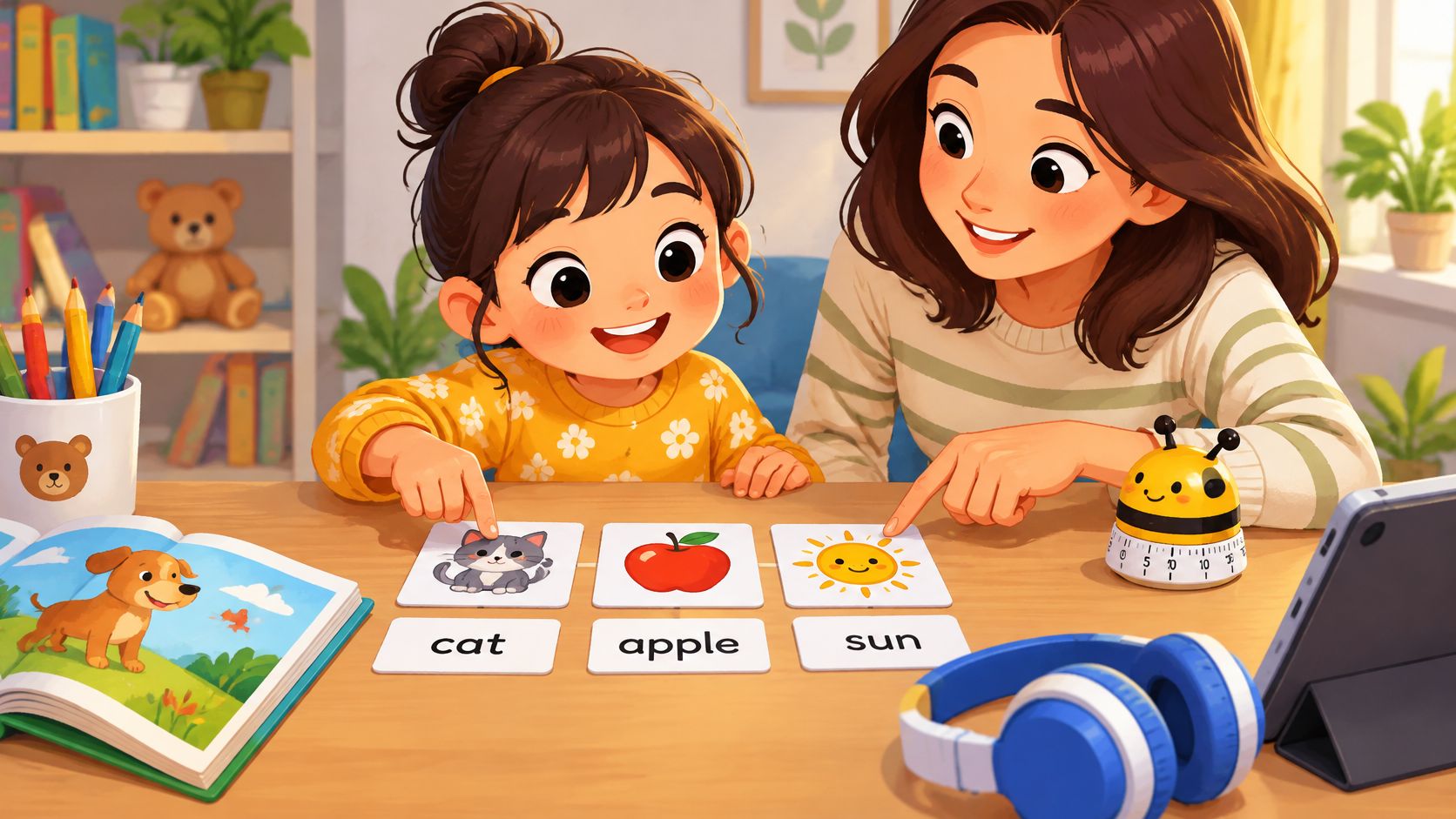
A six-year-old sits down for English practice, taps a picture of a dog, repeats a word, and then wants to show the family pet. That's a useful starting point: a short, enjoyable activity that connects English with something familiar, rather than another worksheet to finish.
Choosing English lessons for 6 year olds means deciding what the family needs most. An app offers flexible practice between everyday activities. A live teacher offers conversation and individual guidance, but lessons need appointments and a reliable connection. Songs and stories offer another route for children who enjoy listening before speaking.
Age and English proficiency aren't the same thing. An older beginner may need the same basic vocabulary as a younger child, but prefer more independence and different topics. A confident reader in the family's home language may still need audio and pictures when starting English.
Starting point: Choose a format that makes listening, responding, and repeating easy. Treat a brief session as a manageable routine, not a test of how quickly a child learns.
These options suit different home routines, from picture-led app practice to scheduled lessons with a teacher. Each also leaves room for simple, no-purchase activities away from the screen.
1. Talkio Kids
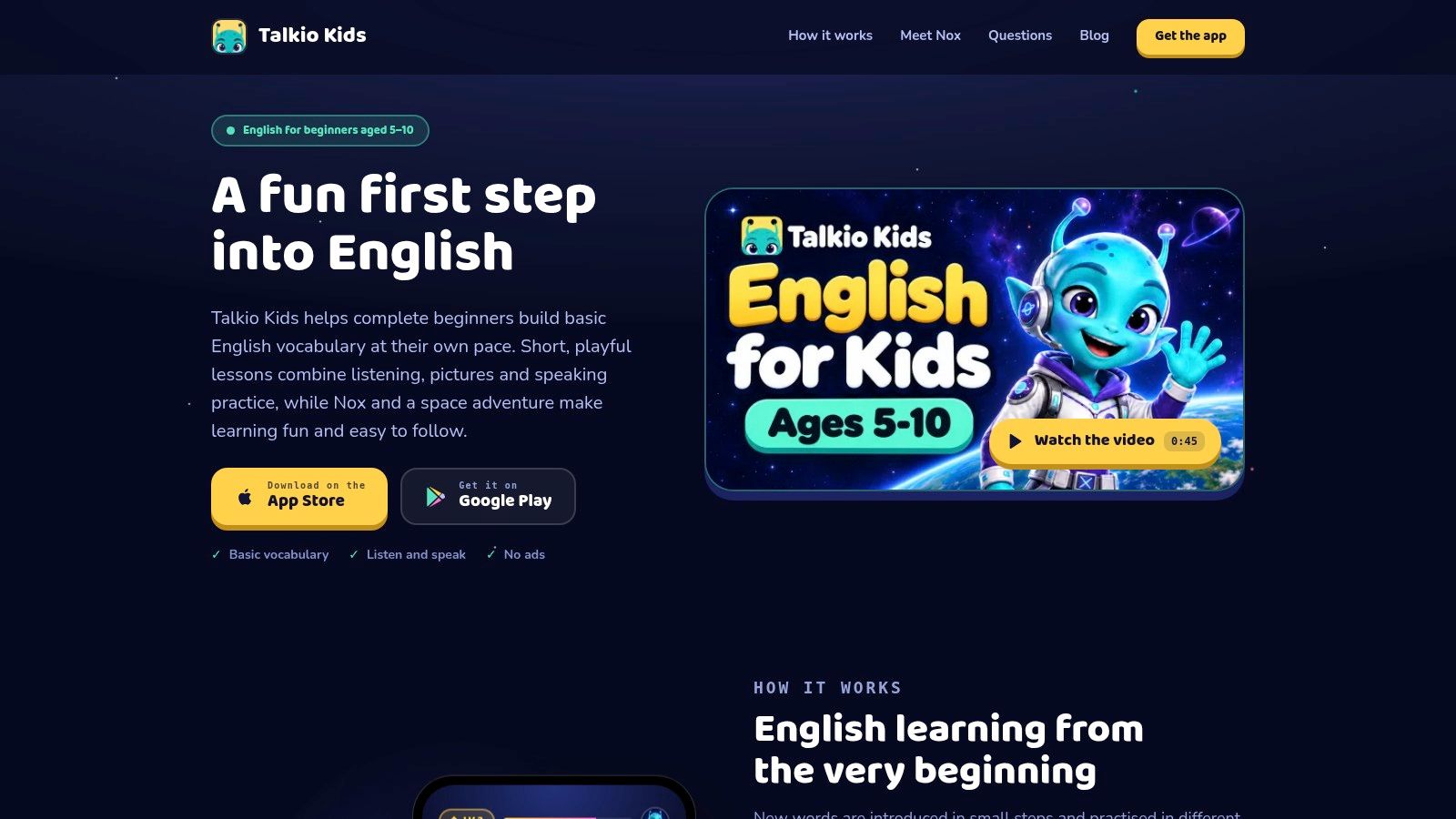
Choose Talkio Kids for focused, flexible beginner practice without live lesson appointments. Talkio Kids is an iOS and Android app for complete beginners aged 5–10, with short listening, picture-matching, speaking, and review activities. Its focus is everyday vocabulary and simple phrases, not a promise of fluency.
Children hear English, connect it with pictures, and practise responding. Audio-led activities make this a practical option for children who aren't ready to read English independently, while Nox, the alien companion, adds a playful space-adventure setting.
What practice feels like at home
A parent can sit nearby while a child listens, matches an image, and tries saying the word. Afterward, the family can connect that word with a real object, such as an apple at snack time or a shoe by the door. A parent who isn't confident in English can guide the routine without becoming the pronunciation model.
Research on parent involvement and early English acquisition found a stronger relationship with acquisition for parental involvement than for gadget use, although that association doesn't establish causation. The practical recommendation is straightforward: pair app practice with a little shared attention, rather than treating device access as the whole lesson.
- Useful strengths: Learning content works offline, progress stays on the device, and no account signup is required.
- Fewer distractions: There are no ads, social features, open chat, or open-ended AI conversations. Purchases sit behind a parent gate.
- Important limits: There's no cloud progress sync, multi-profile support, family plan, school dashboard, emailed reporting, or parent-controlled time limit.
For older beginners, parents can offer more choice over when to practise and which familiar words to use afterward. Teachers and tutors can suggest it as supplementary practice, but shouldn't expect centralized classroom monitoring.
Ongoing access uses monthly or annual subscriptions; current prices and trial eligibility appear in the app. The guide to teaching a child English at home offers further ways to connect digital activities with family routines.
2. All Right
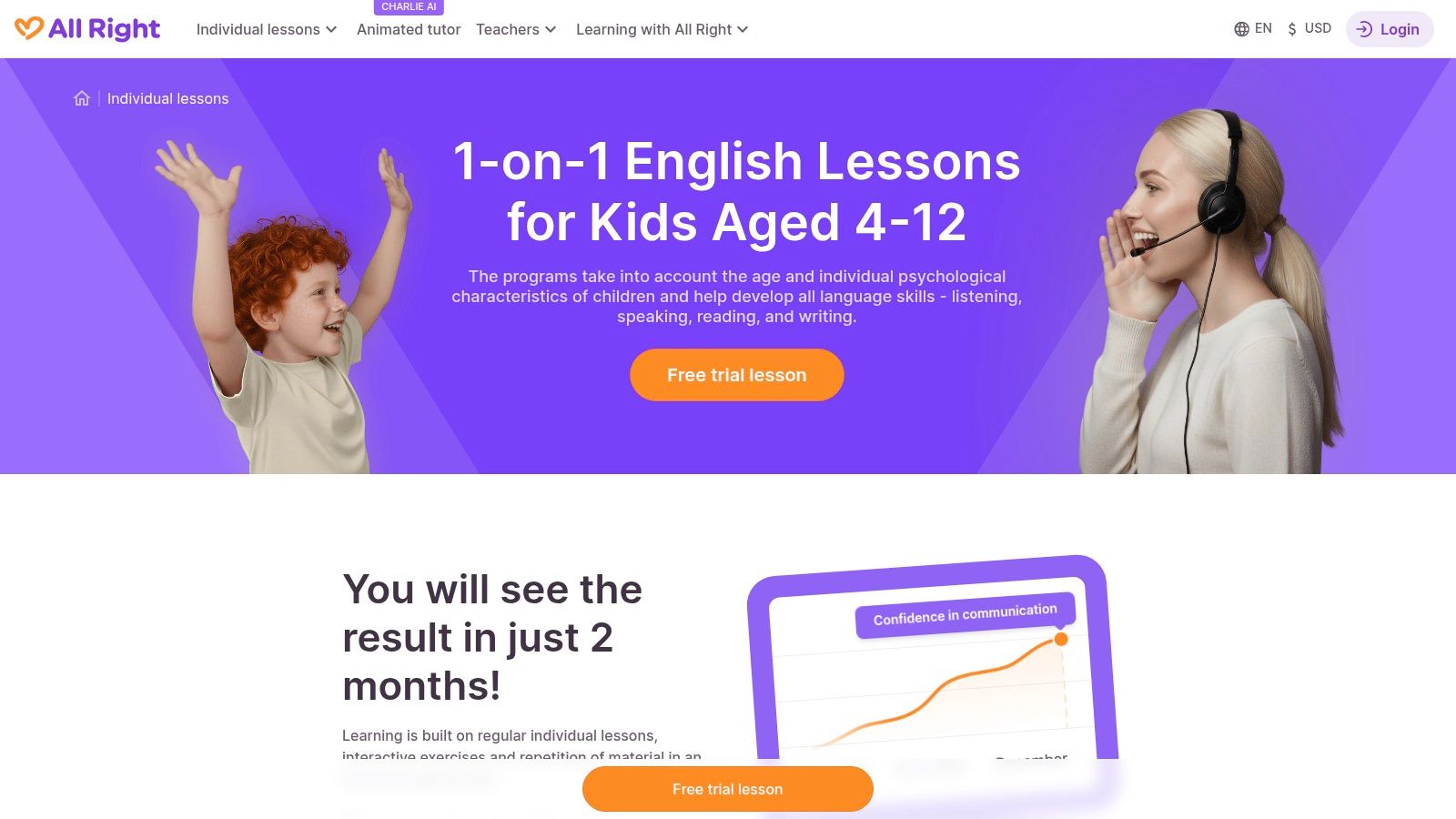
A child who enjoys showing a drawing, copying actions, or answering another person may suit All Right's live teacher format. Its individual English lessons include courses matched to age and level, with preschool materials for ages 4–6 using songs, games, movement, characters, and storylines.
Choose All Right when individual attention matters more than on-demand access. A teacher can provide another model of English and guide practice across listening, speaking, reading, and writing. Parents can use its app for scheduling and teacher feedback.
Make the teacher relationship practical
For a beginner, parents should explain what the child already understands, whether English reading has started, and which interests hold attention. “Enjoys animals but doesn't recognize written English” is more useful preparation than giving the child's age.
An older beginner shouldn't automatically receive preschool-style tasks. Parents can ask for simple language paired with age-appropriate interests, such as sport, drawing, building, or everyday school life.
- Main advantage: Individual attention allows space for repetition and a teacher's response to the child.
- Main commitment: Lessons require scheduled screen time, reliable internet, and adult help with arrangements.
- Before purchasing: Parents should compare teacher fit, lesson plans, package terms, and the cost of their intended schedule.
After a lesson, a family can reuse a familiar phrase during play instead of adding more screen time. For example, a child can show a drawing and name an animal from the lesson, with pointing accepted when words don't come easily.
The English speaking activities for kids guide provides supplementary ideas for that gap between appointments. Tutors can use the same principle when assigning home practice: choose a familiar speaking task, not a separate worksheet.
3. Cambly Kids
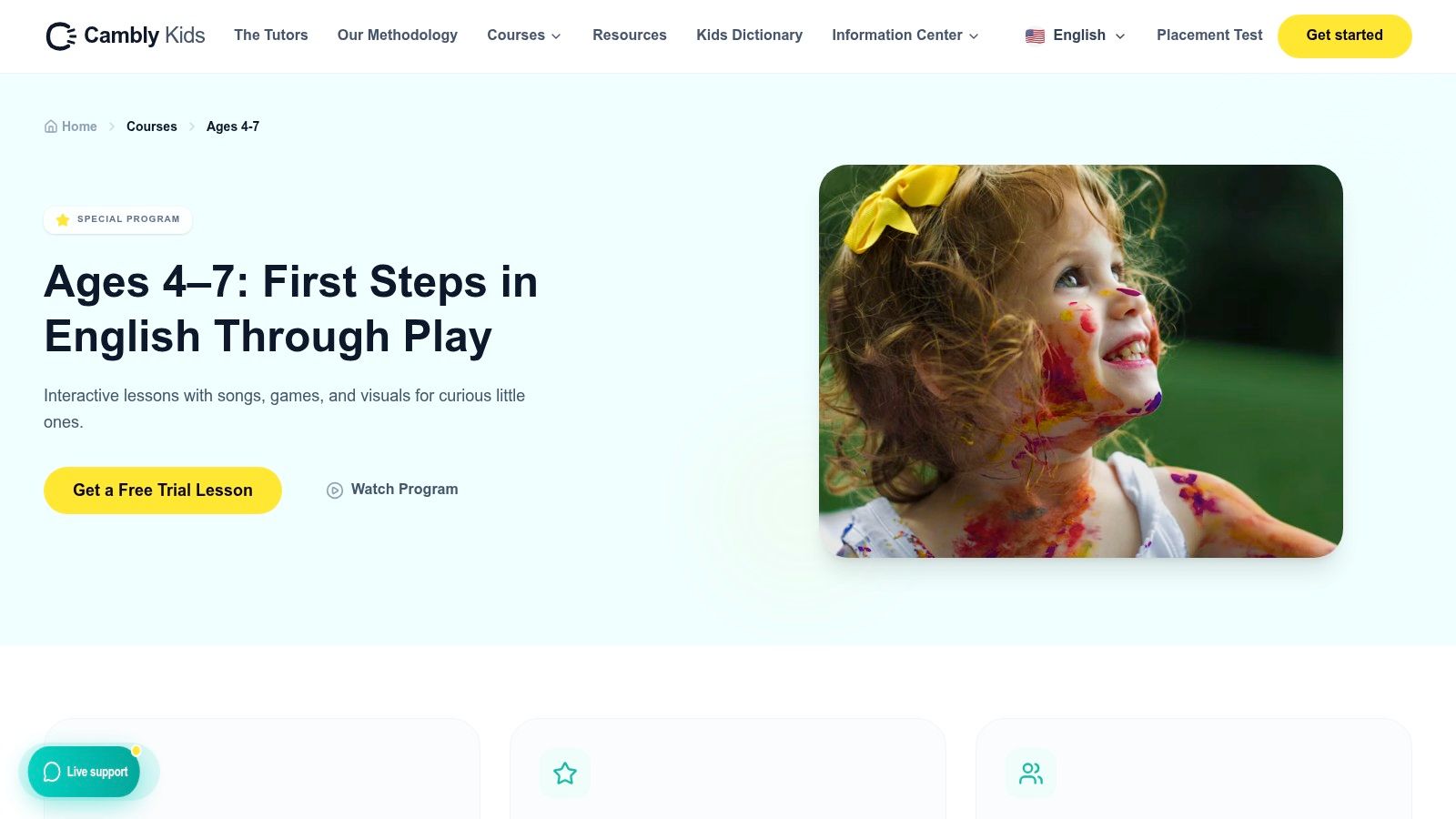
Cambly Kids is a direct choice for families prioritizing live speaking opportunities. Its course for ages 4–7 combines individual online lessons with visuals, songs, games, and early topics such as introductions and everyday objects. Each class pairs a tutor with a child.
Compared with a self-study app, the defining difference is a person responding to what the child says. That makes tutor fit especially important for a complete beginner who needs demonstrations, patient repetition, and time to answer.
A suitable beginner lesson gives the child ways to participate before a complete spoken sentence is possible.
Parents can ask for pictures, gestures, and simple choices rather than expecting open conversation immediately. At home, a familiar object can help: a child might show a toy and practise its name or colour.
Fit the plan to the family
Cambly Kids offers parent-selected plans with different lesson frequencies. The subscription cost depends on the plan and billing choice, so parents should review current terms rather than compare outdated price claims.
- Choose it for: Direct speaking opportunities and live help when a child gets stuck.
- Plan around: Internet access, account management, and lesson scheduling.
- Watch for: A tutor who waits for responses and keeps language manageable, rather than filling every pause.
For an older beginner, parents should request elementary language without assuming the youngest course's presentation will fit. Reading confidence, interests, and willingness to speak deserve separate discussion.
Between classes, families can use the Talkio Kids learning guides to find low-pressure practice ideas. The aim is to revisit familiar language, not turn every evening into another formal lesson.
4. Novakid
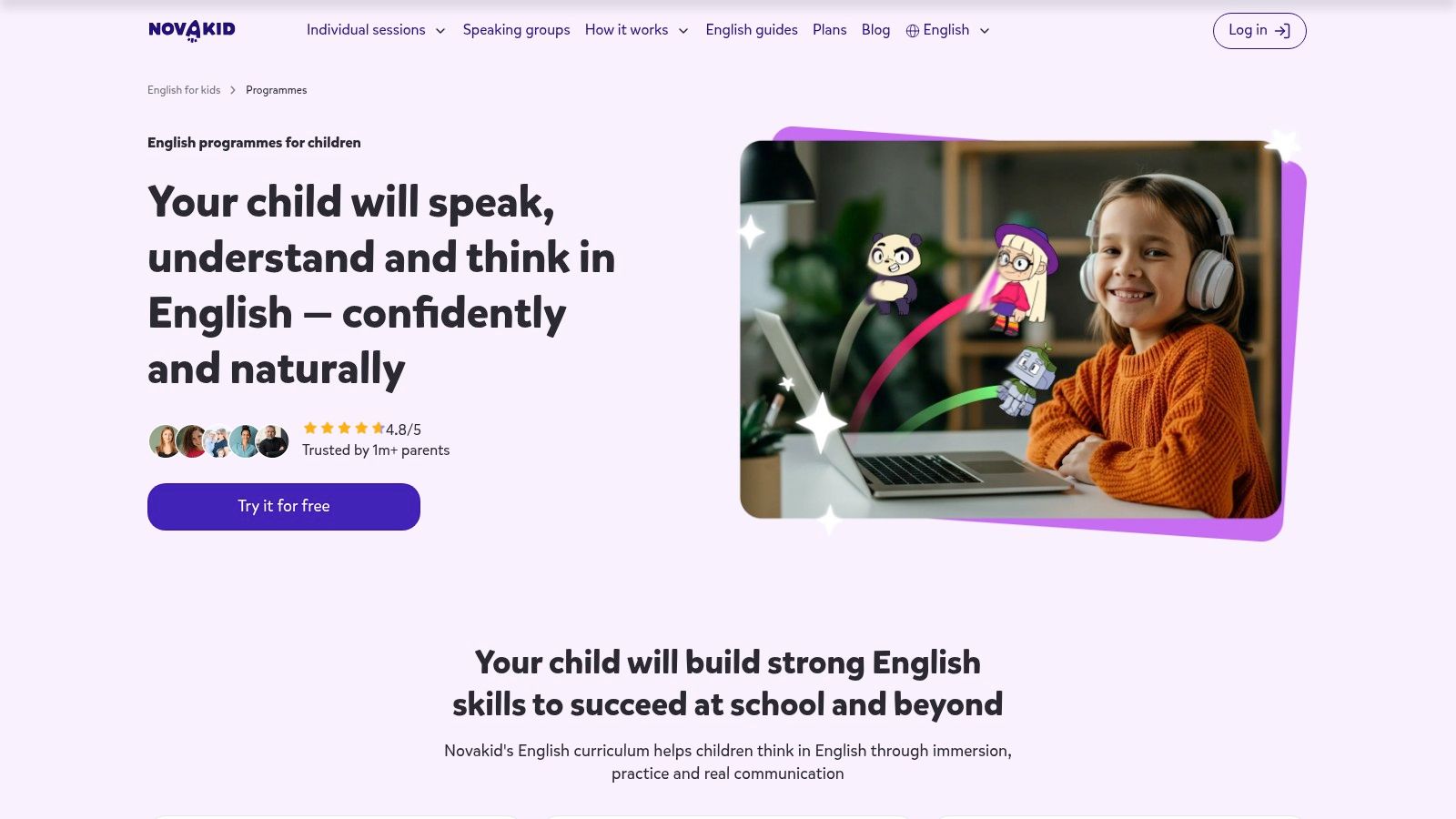
Choose Novakid when parents want a clear course sequence and teacher feedback. Its English programs use a curriculum organized around CEFR levels, including Level 1 for ages 6–7. Lessons last 25 minutes and combine teacher-led work with games and interactive practice.
The course includes simple vocabulary, short phrases, everyday routines, basic grammar, and early reading and phonics. A parent account provides feedback and progress information, while some plans include speaking groups.
Structure without adding pressure
This format suits a family that wants the teacher to organize what comes next. It requires more planning than an app opened whenever there's a quiet moment, so the practical question is whether the household can protect lesson appointments.
Parents shouldn't treat a course level as a judgment of intelligence or maturity. An older child starting English can need elementary language while handling instructions, interests, and independent tasks differently from a younger learner.
- Strong point: A visible learning sequence makes it easier to discuss current topics with the teacher.
- Trade-off: Live attendance needs stable internet and adult scheduling.
- Cost consideration: Pricing varies with teacher category, lesson frequency, and subscription length.
A useful home follow-up is to connect a lesson phrase with play. After practising descriptions, a child could build a tower and use “red block” or “big tower,” without completing another digital exercise.
NAEYC's guidance on developmentally appropriate practice describes how adults can introduce vocabulary through children's interests and meaningful play. For tutors, that supports assigning an activity tied to the child's current topic rather than an unrelated list of words to memorize.
5. Studycat English
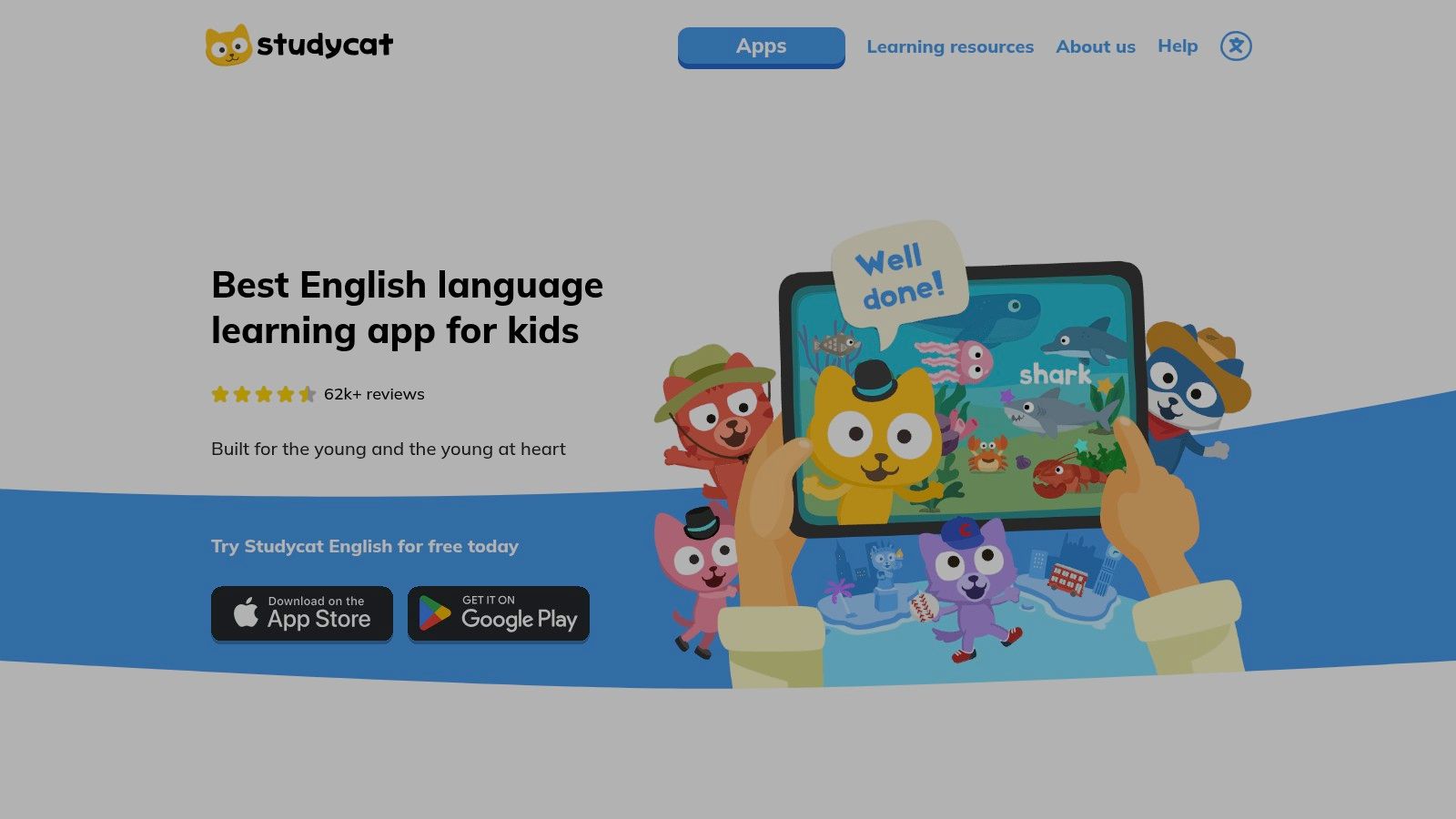
For a family that can't maintain live appointments, Studycat English offers self-paced games, stories, and songs. The Studycat English app is aimed at children from age 3, with vocabulary, pronunciation, and speaking activities, including support for children who can't yet read independently.
Its limited free version provides a way to inspect the format before considering paid access. Full content requires a subscription, and parents should check current inclusions and offline availability before relying on it for travel.
Choose Studycat for a child who enjoys learning through interactive play. It isn't a substitute for a conversation partner, so the strongest home routine includes an opportunity to use a word beyond the game.
Turn tapping into a response
After an activity about familiar objects, a parent can ask the child to point to a matching object nearby. Speaking can follow when the child is ready, with a single word accepted instead of a full sentence.
NAEYC's everyday literacy guidance includes vocabulary, sound play, listening, and conversation, rather than letter recognition alone. That gives parents a useful way to assess an app activity: the child should have something to hear, understand, or say, not merely buttons to press.
- Good fit: Flexible practice for early readers who enjoy audio-visual games.
- Main limitation: A game can provide practice, but it doesn't offer a live teacher's response.
- Older-beginner adaptation: Parents should check whether the presentation feels appealing, then offer more control over activity choice.
Teachers can suggest a familiar topic for home use and ask children to bring back a drawing or spoken word. That keeps supplementary practice connected to classroom learning without requiring purchased materials.
6. Lingokids
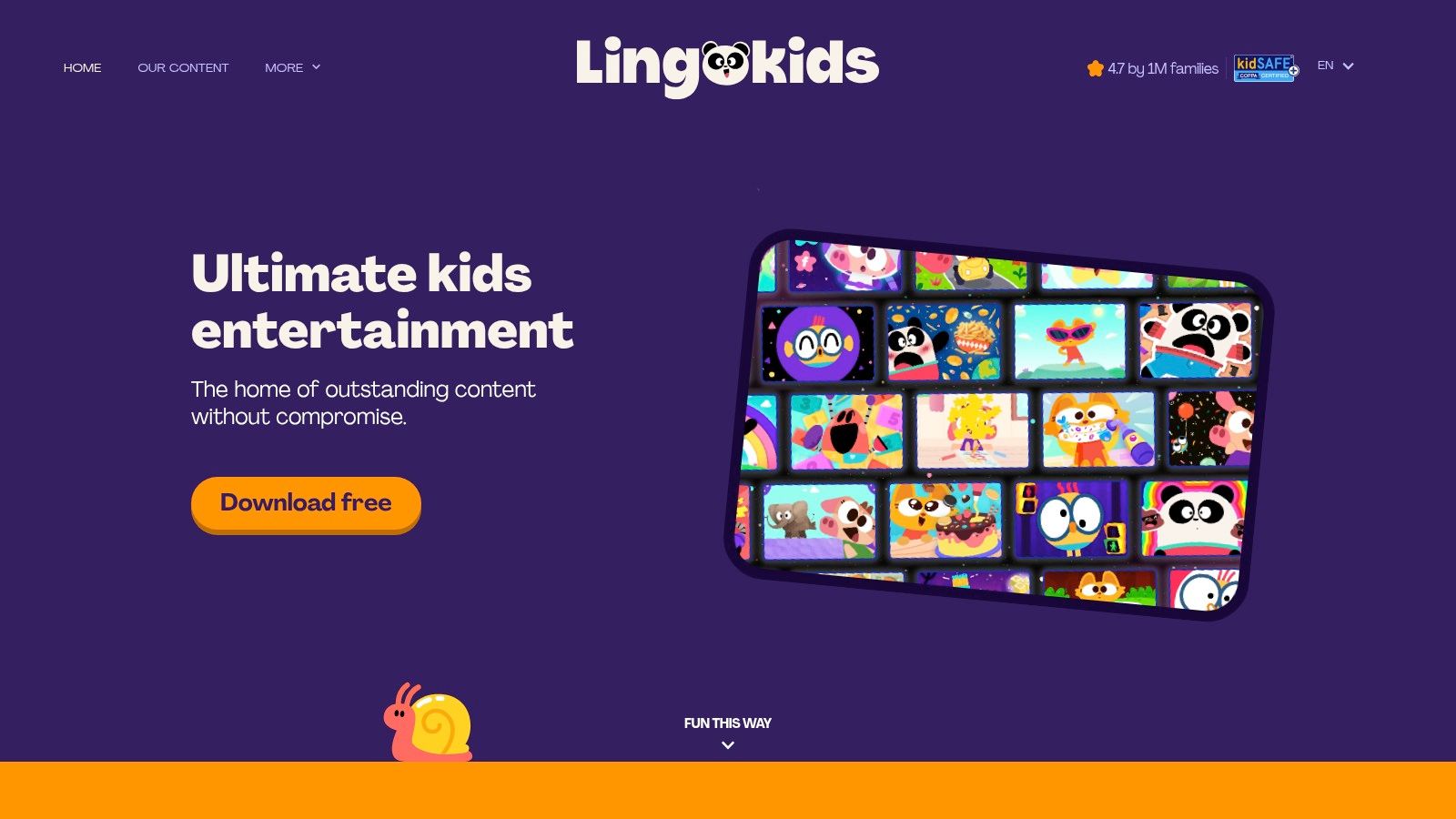
Lingokids suits families looking for English within a broader early-learning app. Lingokids serves ages 2–8, with vocabulary, pronunciation, alphabet, and literacy activities alongside other learning content. Its Plus subscription includes offline access, progress information, and up to four child profiles.
That breadth is the central difference from a dedicated beginner-English course. A family may welcome the variety of games, songs, videos, and digital books, but parents seeking focused language practice should choose activities deliberately.
Keep the purpose visible: Pick an English activity before opening the app, then connect its language with something away from the screen.
A family could choose food vocabulary and later name an item at snack time. The follow-up doesn't need to become a quiz; offering a choice and accepting a gesture keeps participation manageable.
Variety versus focus
Lingokids describes its experience as ad-free. Parents should still review the current Plus offer, trial terms, and app-store pricing, since those can vary.
- Useful for siblings: Separate profiles can help a family manage different children's activity choices.
- Useful away from home: Plus offline access can support practice without reliable Wi-Fi.
- Less suitable for a narrow goal: The broader content requires more parent selection when beginner English is the priority.
For children near the upper end of the stated age range, parents should inspect both the language level and presentation. For older beginners outside that range, an option explicitly serving their age group is the clearer starting point.
A survey of multilingual families in Luxembourg recorded parents' concerns about age appropriateness and material quality alongside perceived benefits of digital media. Access alone isn't a sufficient reason to choose an activity; suitable content matters.
7. British Council LearnEnglish Kids Playtime
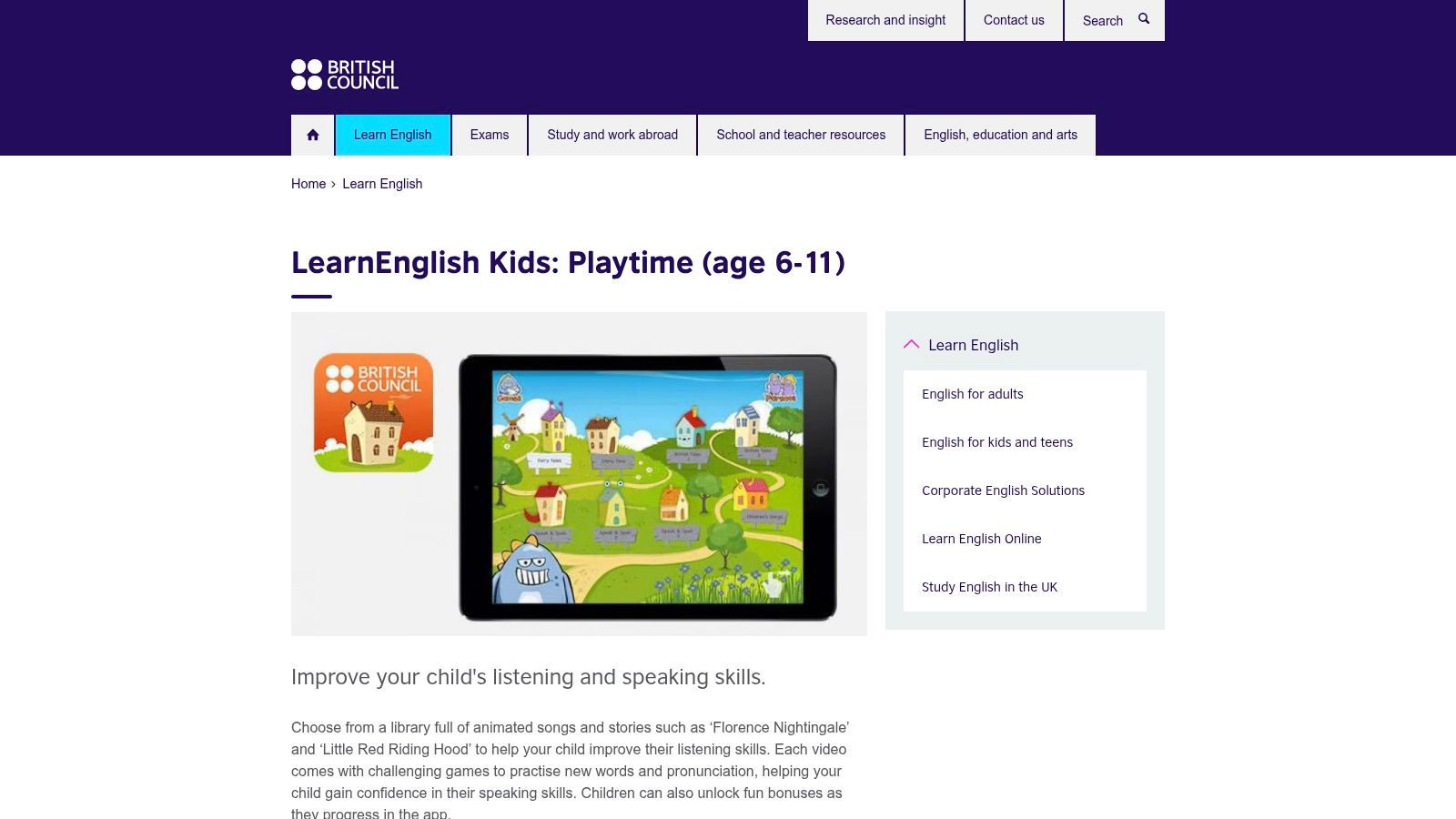
A child who asks for the same story again may prefer British Council LearnEnglish Kids Playtime to a drill-style game. The Playtime app for ages 6–11 uses animated songs and stories, vocabulary and spelling games, and listen-and-record speaking activities.
Choose it for story-led listening and opportunities to repeat spoken language. Downloadable videos support offline viewing, and a parent area provides progress information across skill categories. Parents should check the content available before subscribing and select activities that match the child's understanding.
Make a story interactive
A parent can pause at a familiar picture, invite the child to name something, and expand a short response. If the child says “dog,” the adult can add “small dog,” then invite another look or repetition.
That resembles the prompt, evaluate, expand, and repeat sequence described in Reading Rockets' dialogic reading guidance. The adult's role is to encourage participation, not deliver every sentence.
- Main strength: Songs and stories provide a different route into repeated listening.
- Speaking opportunity: Recording allows children to try familiar language without a live audience.
- Main limitation: The app doesn't replace live interaction, and activities within its broad age range need selection.
An early reader can point, act out an action, or repeat a phrase. An older beginner can choose a story, prepare a short recording, or retell a familiar scene with drawings.
Teachers and tutors can use the same story as a shared reference for later speaking. The follow-up should remain within language the learner understands, rather than requiring a complete retelling before the child is ready.
7 English Learning Options for 6-Year-Olds: Comparison Table
| Option | Implementation Complexity | Resource Requirements | Expected Outcomes | Ideal Use Cases | Key Advantages |
|---|---|---|---|---|---|
| Talkio Kids | Low; short, self-paced lessons | Mobile device; works offline; subscription for ongoing use | Everyday vocabulary and simple phrases | Beginner children who need flexible, audio-led practice | No ads or social features; no account required |
| All Right | Moderate; lessons need scheduling and teacher selection | Device, reliable internet, paid lesson package | Practice across listening, speaking, reading, and writing | Children who benefit from individual teacher attention | Tailored live lessons and teacher feedback |
| Cambly Kids | Moderate; parents manage scheduling and tutor selection | Device, reliable internet, paid subscription | Speaking practice with tutor support | Young learners seeking interactive one-to-one lessons | Direct conversation and individual attention |
| Novakid | Moderate; requires regular scheduled lessons | Device, reliable internet, paid subscription | Structured progress in practical language and early literacy | Families seeking a sequenced, teacher-led course | Age-banded curriculum and progress feedback |
| Studycat English | Low; self-paced app activities | Mobile device; subscription for full content | Vocabulary and pronunciation practice | Early readers who prefer games, stories, and songs | Flexible practice and a limited free version |
| Lingokids | Low; self-paced app activities | Mobile device; Plus subscription for offline access and multiple profiles | English skills alongside broader early learning | Families wanting varied activities or profiles for multiple children | Broad content, offline mode with Plus, and multiple child profiles |
| British Council LearnEnglish Kids: Playtime | Low; app-based activities with parent progress review | Mobile device; downloaded videos support offline use | Listening, vocabulary, pronunciation, speaking, and spelling practice | Children who enjoy animated stories and songs | Listen-and-record activities and parent progress information |
Choose One Routine and Make It Repeatable
For most families, the strongest choice is the option a child will return to without pressure. Talkio Kids suits focused, offline beginner practice; All Right, Cambly Kids, and Novakid suit families seeking live teacher guidance. Studycat emphasizes self-paced games, Lingokids offers broader early-learning variety, and British Council Playtime suits children drawn to songs and stories.
Starting early isn't a deadline. A Cambridge overview of age and second-language acquisition describes different proposed sensitive periods and gradual changes in learning ability, not a universally supported magic age. Parents choosing English lessons for 6 year olds should prioritize meaningful, sustained practice rather than worry that a narrow opportunity is closing.
Keep the routine small enough to repeat
A practical starting routine can last about ten minutes, treated as a suggested household plan rather than a research-backed optimum. Parents can introduce familiar expressions such as “hello,” “please,” or “thank you,” add a matching or speaking activity, and revisit the language later.
- Listen: Let the child hear a clear word or phrase.
- Point or match: Offer a picture, object, or simple choice.
- Speak: Invite an attempt without requiring perfect pronunciation.
- Return later: Reuse familiar language during play or an everyday routine.
Parents who aren't confident English speakers can use the family's home language to explain the activity and rely on recorded audio for the English model. There's no need to correct every attempt or turn every interaction into a lesson.
For older beginners, keep the language accessible while increasing choice and independence. A child can select a topic, replay an activity, or decide how to demonstrate a familiar phrase without constant adult prompting.
A mixed-methods study of family English-learning practices describes routines involving storytelling, singing, and interactive digital activities, alongside barriers such as limited parental time and English confidence. A manageable routine respects those realities.
Families choosing app-based practice can explore Talkio Kids and its download options, then review current subscriptions and trial eligibility in the app. Downloads are available through the App Store and Google Play.
Talkio Kids offers short listening, picture-matching, speaking, and review activities for children beginning English, with offline content and no account signup. Parents looking for a repeatable home routine can visit Talkio Kids to explore the app and choose a subscription that fits their family.