
English learning at home
10 English Words for Kids: Themes, Phrases and Play
English Words for Kids grouped by everyday themes, with simple phrases and playful home activities parents can try today. Ideas for ages 5 to 10.
By Talkio Kids ·
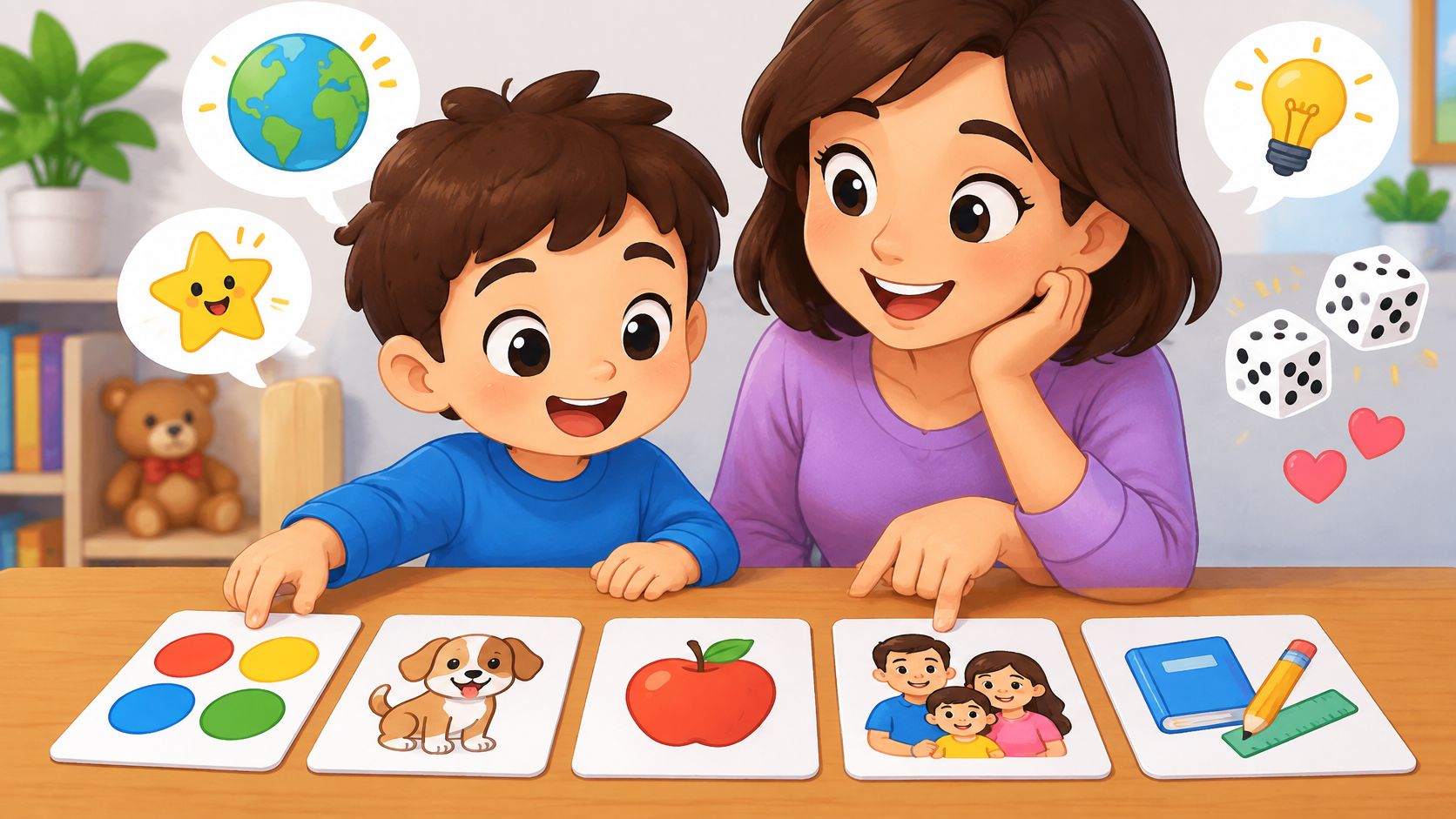
A parent is at the kitchen table after school. A child points at an apple, a red jumper, then the rain at the window, and the parent wonders which English words to teach first. There's no need to start with a long list or a textbook. Children learn best when words belong to their own day, to the people at the table, the socks on their feet, and the food on their plate.
This guide groups English words for kids into ten everyday themes. Each theme has one ready-to-say phrase, one five-minute game, and simple stage notes for ages 5 to 6, 7 to 8, and 9 to 10. A 9-year-old can be a complete beginner, so the starting words stay the same while the answers grow longer and more independent.
Progress doesn't require thousands of words at once. The Reading Universe overview of vocabulary growth notes that a typical five-year-old entering kindergarten knows approximately 5,000 to 10,000 words, while most children know at least 20,000 words by age 10, with wide variation between children. Parents can borrow the matching and turn-taking ideas in these card game recommendations from Lost Boy Entertainment and just swap in English words.
1. Family and People Who Is in the Family

Start with people the child loves and sees every day. Useful first words are mum, dad, sister, brother, grandma, grandpa, baby, and friend. Real faces make meaning clear, so a child doesn't need translation or reading yet.
Say It and Play It
The ready phrase is "This is my sister." For the Family Photo Tour, a parent points to a photo and says, "This is my mum. She is happy." The child points, repeats, then chooses the next person. If photos aren't handy, quick drawings work just as well for a matching game.
- Ages 5 to 6: Point and say one word, such as "Grandma!"
- Ages 7 to 8: Use the full phrase, "This is my brother."
- Ages 9 to 10: Add a detail, such as "This is my dad. He is funny."
Keep the same two or three phrases for several days. Let the child become the teacher and quiz the parent. That small role swap turns quiet listening into confident speaking without pressure.
2. Colours and Shapes Hunt Point and Say
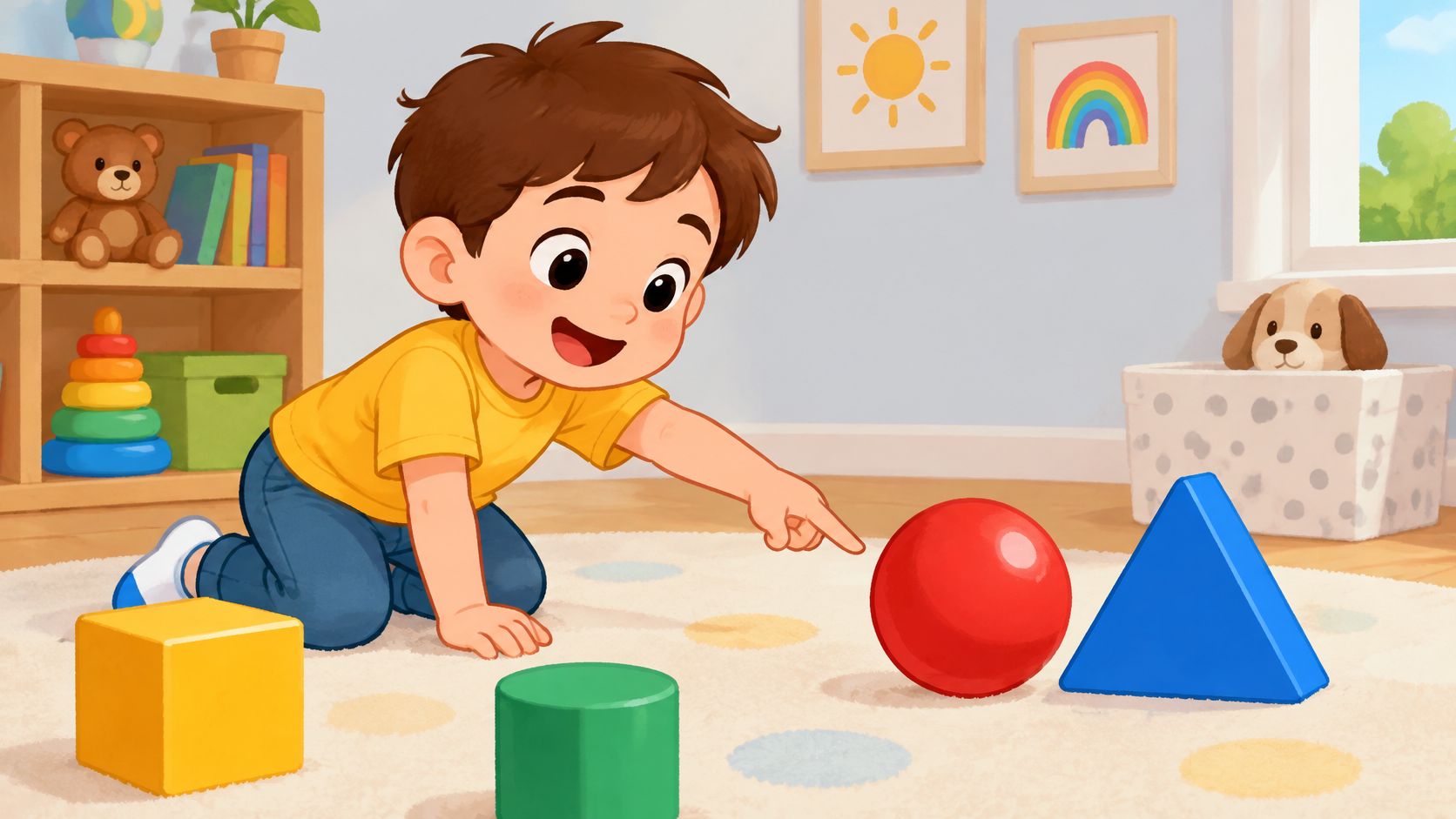
Colours and shapes give quick wins because children can see and touch them. Begin with red, blue, yellow, and green, plus circle, square, and triangle. The British Council guidance on teaching children recommends presenting the same vocabulary in different ways to maximize language repetition, and a colour hunt does exactly that.
Say It and Play It
The ready phrase is "It is red." For Colour Hunt, the parent calls a colour and the child runs to find an object of that colour. Then Shape Spotter asks for a circle on a plate or a square on a box.
- Ages 5 to 6: Find and touch, then repeat the colour word.
- Ages 7 to 8: Answer "It is a blue circle."
- Ages 9 to 10: Answer a question form, "What colour is the sofa?" with a full sentence.
Practical rule: Two or three new colours a week is plenty. Point while speaking so the ear, eye, and hand learn together.
3. Numbers 1 to 20 Counting Through Play
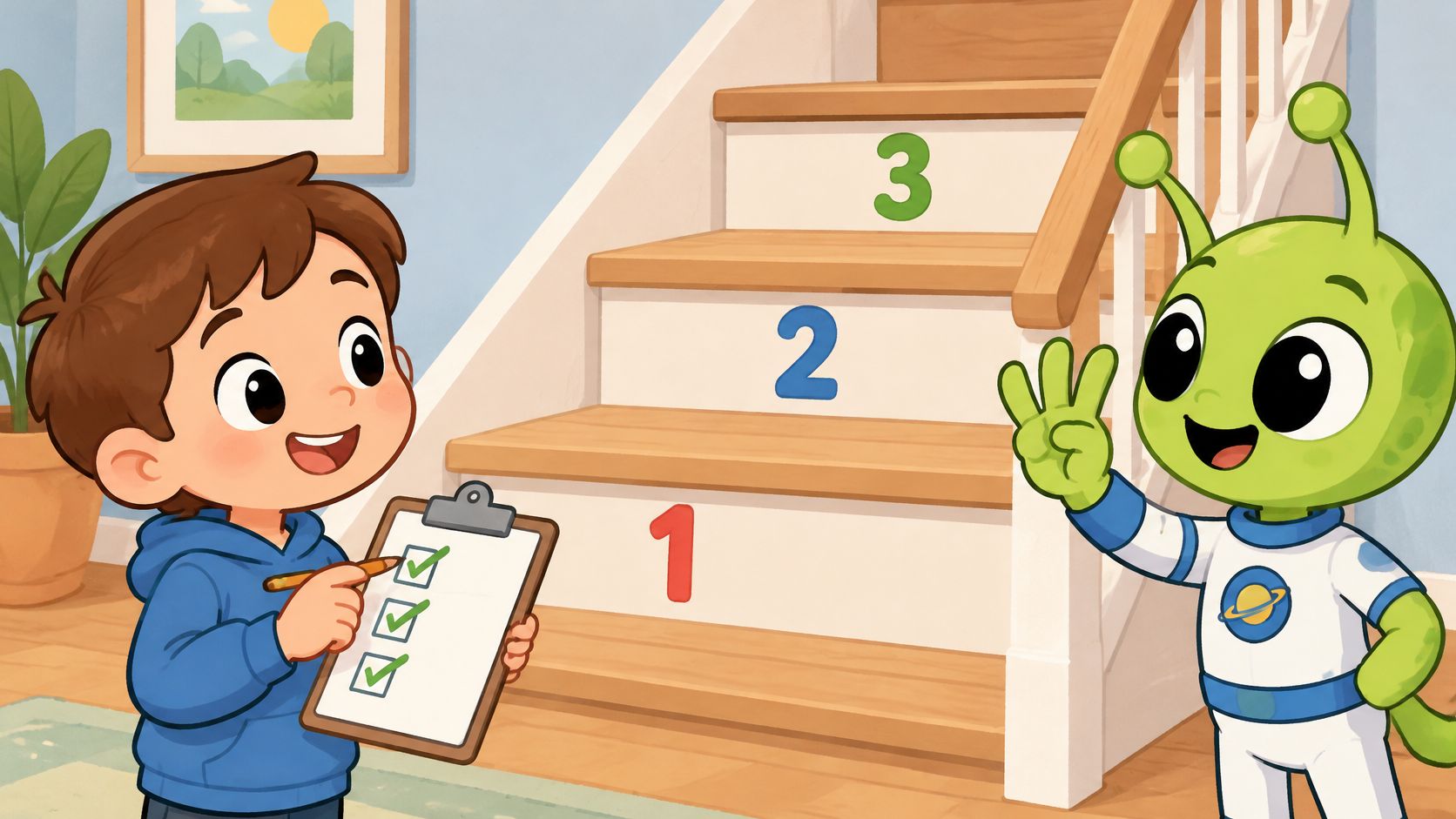
Numbers earn their place early because children use them for snacks, stairs, games, and shopping. Teach one to ten first, then eleven to twenty as a second set. Real objects beat cards alone, since the child can move each item while counting aloud.
Say It and Play It
The ready phrase is "I have five." During Stair Count, the child counts each step in English while climbing. At Snack Share, the child counts five grapes into a bowl and says the phrase before eating.
- Ages 5 to 6: Count one to five objects with support.
- Ages 7 to 8: Count to twenty and answer "How many?"
- Ages 9 to 10: Compare amounts with "I have eight. You have six."
Practise thirteen to nineteen separately from thirty to ninety later, because they sound similar. Parents who want calm printable practice can pair the games with these English worksheets for kindergarten and early beginners, then return to counting real things at home.
4. Animals Pets Farm and Wild Friends
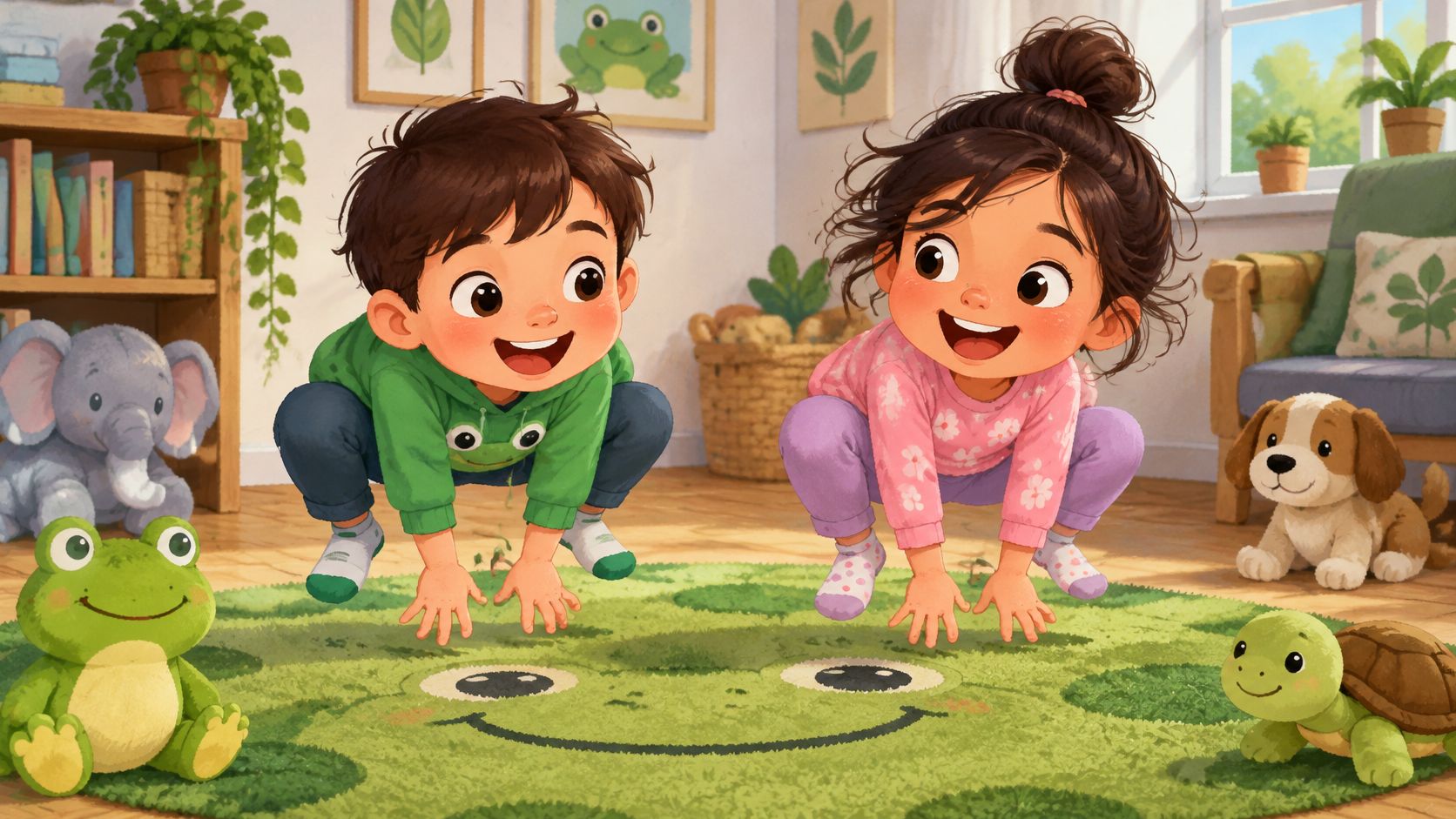
Animals invite sound, movement, and laughter, which helps memory. Start with animals the child already knows from toys or books, such as cat, dog, horse, frog, lion, and elephant. Families who love horses can even end the day with bedtime reading for your little equestrian and repeat the English animal names together.
Say It and Play It
The ready phrase is "I see a big dog." In Animal Charades, the child hops like a frog or stomps like an elephant while the parent guesses in English. In Farm Sounds, the parent makes the sound and the child says the word.
- Ages 5 to 6: Say one word and copy the movement.
- Ages 7 to 8: Use "I see a cat" and add big or small.
- Ages 9 to 10: Describe where it lives, such as "A horse lives on a farm."
Three to five animals at a time keeps the game light. Accept a single word first, then grow it into a sentence. This page of simple English words for beginners can help parents choose the next small set.
5. Food and Drinks at the Snack Table
Food words repeat naturally at breakfast, lunch, and snack time. Useful starters are apple, banana, bread, egg, cheese, milk, juice, and water. Because meals happen every day, children hear and use these words often without a formal lesson.
Say It and Play It
The ready phrase is "Can I have water, please?" In Snack Shop, the child plays shopkeeper while the parent asks, "Do you have an apple?" At Breakfast Order, the child asks for one food and one drink in English before eating.
- Ages 5 to 6: Name the food and add please.
- Ages 7 to 8: Use the full request, "Can I have bread, please?"
- Ages 9 to 10: Make choices, such as "I want juice, not milk."
The Education Endowment Foundation summary on oral language interventions reports an average impact equivalent to six additional months of progress for oral-language approaches, which supports making mealtimes talkative rather than passive. Parents shouldn't correct every word during meals. A gentle repeat of the correct word keeps the table relaxed.
6. Body Parts Head Shoulders Knees and Toes
Body words are easy to teach because the teaching tool is always present. Begin with head, eyes, nose, mouth, hands, knees, feet, and toes. Touching each part while saying the word gives early readers clear meaning without printed text.
Say It and Play It
The ready phrase is "Touch your nose." Play Simon Says in English for two minutes, with commands such as "Touch your head" and "Touch your feet." Follow it with the Head, Shoulders, Knees and Toes song and actions.
- Ages 5 to 6: Follow one simple command at a time.
- Ages 7 to 8: Give the commands while the parent follows.
- Ages 9 to 10: Add challenge with "Touch your left knee."
Short movement breaks suit children who find sitting still hard. The parent can also make funny mistakes on purpose and let the child correct them. Laughter is useful here, because a child who corrects an adult is already using the language with confidence.
7. Clothes Getting Dressed in English
Getting dressed happens every morning, so it makes a ready-made routine. Start with clothes the child owns, such as shirt, trousers, dress, socks, shoes, hat, and jumper. Three words a week, repeated each morning, soon feels familiar.
Say It and Play It
The ready phrase is "I am wearing a red jumper." In Dress-Up Race, the parent names one item at a time and the child puts it on. For Mystery Bag, the child feels an item inside a bag and guesses the English word before looking.
- Ages 5 to 6: Name the item while putting it on.
- Ages 7 to 8: Describe the full outfit in one sentence.
- Ages 9 to 10: Describe someone else, such as "She is wearing blue shoes."
Morning English works when it's tiny. One outfit, one sentence, then out the door.
Older beginners often enjoy describing a friend, a sports kit, or a favourite character's clothes. The words stay simple, but the topic feels grown up enough for a 9 or 10-year-old.
8. Home and Rooms Where Things Are
Home words help children follow instructions and describe familiar places. Begin with three rooms and five objects, such as kitchen, bedroom, bathroom, bed, table, chair, door, and cup. Location words on, in, and under add real power to short sentences.
Say It and Play It
The ready phrase is "The cup is on the table." In Find It, the parent hides a ball and says, "The ball is under the bed," while the child searches. During a House Tour, the child walks room to room naming furniture in English.
- Ages 5 to 6: Name rooms and touch objects.
- Ages 7 to 8: Use on, in, and under with hand gestures.
- Ages 9 to 10: Give hiding instructions to a parent or sibling.
Parents who want a fuller word bank can browse this guide to English vocabulary for kids and pick only the rooms found in the child's own home. Familiar spaces make practice faster, because the child already knows where everything belongs.
9. Weather and Seasons What Is It Like Today
Weather words are short, visual, and easy to check at the window. Teach sunny, rainy, cloudy, windy, snowy, hot, and cold, then link each word to clothes and plans. A simple picture chart by the door turns the theme into a daily habit.
Say It and Play It
The ready phrase is "It is sunny today." For Weather Report, the child looks outside each morning and reports the weather in one sentence. For Weather Match, picture cards are matched to words such as sunny and rainy.
- Ages 5 to 6: Point outside and say "Rainy!"
- Ages 7 to 8: Answer "Is it hot or cold today?"
- Ages 9 to 10: Look ahead with "It is going to rain."
The U.S. Institute of Education Sciences practice guide on teaching academic content to English learners recommends teaching vocabulary intensively across several days using a variety of activities. A daily weather check follows that pattern naturally, revisiting the same words in slightly new conditions all week.
10. Places in Town Going Out Together
Place words help children talk about real trips and plans. Choose places from the child's own week first, such as school, park, shop, library, station, and home. This theme suits older beginners especially well, because they can describe journeys they already make independently or with family.
Say It and Play It
The ready phrase is "I am going to the park." In Where Are We Going, the parent describes a place and the child guesses, "The shop!" For Map Walk, the family draws a simple paper map together and the child names each place while pointing.
- Ages 5 to 6: Name the place before leaving home.
- Ages 7 to 8: Answer "Where are you going?" in a sentence.
- Ages 9 to 10: Give a tiny route, such as "First the shop, then the park."
Three familiar places are enough to begin. Bus stops, football pitches, and grandparents' streets can be added later. Real destinations give older children a reason to speak, not just a list to memorise.
How the ten everyday word themes compare for home practice
| Theme | Best ages | Sample phrase | Materials needed |
|---|---|---|---|
| Family and People: Who Is in My Family? | 5–6; adaptable for 7–8 | This is my sister. | Family photos or drawings |
| Colours and Shapes: Hunt, Point and Say | 5–7 | It is red. | Everyday household objects |
| Numbers 1 to 20: Counting Through Play | 5–8 | I have three. | Toys, steps, or snacks |
| Animals: Pets, Farm and Wild Friends | 5–8; also older beginners | I see a big dog. | Animal toys, books, or drawings |
| Food and Drinks: At the Snack Table | 5–10 | I want some water, please. | Familiar foods and drinks |
| Body Parts: Head, Shoulders, Knees and Toes | 5–7; also older beginners | Touch your nose. | Safe space to move |
| Clothes: Getting Dressed in English | 7–10 | I am wearing a red jumper. | Everyday clothes |
| Home and Rooms: Where Things Are | 7–10 | The cup is on the table. | Household objects |
| Weather and Seasons: What Is It Like Today? | 7–10 | It is sunny today. | Window view or weather picture cards |
| Places in Town: Going Out Together | 9–10; adaptable for 7–8 | I am going to the park. | Simple map or local places |
Pick One Theme This Week and Start Small
The simplest plan is also the most sustainable one. A family picks one theme, two phrases, and one five-minute game for the week, then repeats them at natural moments. Breakfast covers food, the hallway covers clothes and weather, and the walk to school covers places in town.
That rhythm matters more than long sessions. A review in PMC on vocabulary and reading comprehension reports that approximately 10% of children aged 7 to 11 may have poor reading comprehension despite accurate and fluent decoding, which is one reason word meaning needs listening, pictures, and use, not decoding alone. Children who hear a word, see it, act it out, and say it in a phrase get several chances to make it stick.
Parents who aren't confident English speakers can still lead every game in this guide. The phrases are short, the objects are visible, and the child can answer with pointing before speaking. Audio models help too, because the Reading Rockets guidance for parents and educators lists phonemic awareness, phonics, fluency, vocabulary, and text comprehension as five areas of reading instruction, with daily read-alouds helping children hear fluent language. An app or a game should sit beside books and conversation, not replace them.
Screen time deserves the same calm approach. The OECD report on home learning environments finds that almost half of five-year-olds in the surveyed jurisdictions use a digital device every day, while links between device-use frequency and early-learning outcomes are generally weak or non-significant. Short, purposeful practice with one clear goal fits family life better than long passive sessions.
If a family later wants a calm place for a child to hear, match, and say these words with pictures and audio, parents can explore Talkio Kids and get the app. It's an educational aid for complete beginners aged 5 to 10, with short listening, picture-matching, speaking, and review activities guided by Nox the alien companion. Content works offline, progress stays on the device, and no account signup is needed.
Talkio Kids is available through the App Store page for Talkio Kids and the Google Play page for Talkio Kids. Monthly and annual subscriptions exist, and trial eligibility and current prices are shown in the app. It doesn't guarantee a particular learning outcome, so families should keep the routine short, kind, and enjoyable, and let the child lead when ready.
Talkio Kids gives complete beginners aged 5 to 10 short listening, picture-matching, speaking, and review practice for everyday words like the themes in this guide, with audio and pictures that support early readers and content that works offline. Parents who'd like a calm, playful way to keep a five-minute English routine going at home can visit Talkio Kids to see how Nox the alien companion guides each lesson.