
English learning at home
English Vocabulary for Kids: 8 Fun Activities at Home
Discover eight playful English vocabulary for kids activities for ages 5 to 10, using only paper, pictures and a few minutes at home.
By Talkio Kids ·
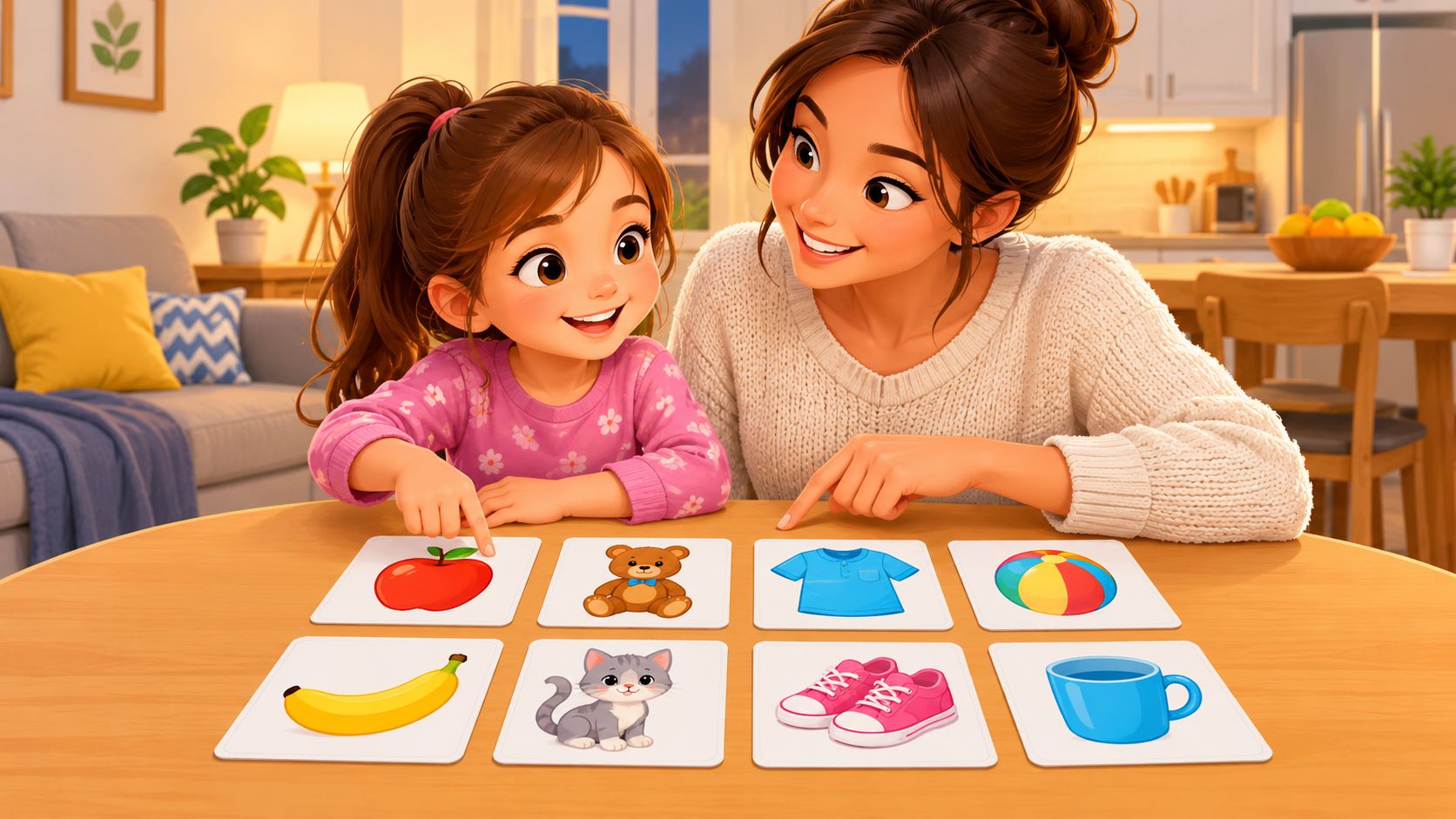
Dinner is nearly ready. A seven-year-old is tired, and a parent wants a little English practice that doesn't feel like more homework. The child can recognise an animal on a screen but goes quiet when someone asks its English name.
English vocabulary for kids works best as something children can use, not just a list adults ask them to memorise. A cup at dinner, a missing picture card or a pretend rocket mission gives a familiar word a practical purpose. British Council guidance recommends grouping vocabulary by meaningful topics and combining saying, drawing, listening and regular recall in activities for child learners.
The activities below need only household objects, scrap paper or an existing book. Each includes adjustments for ages 5–6, 7–8 and 9–10, without assuming that older children already know English.
Starting point: Age should shape the presentation, while English knowledge should shape the language. An older beginner can use simple words in an interesting, age-respectful task.
Parents don't need to create an English-only home. A small, repeatable exchange is a manageable place to begin.
1. Point, Say and Match with Picture-Word Cards
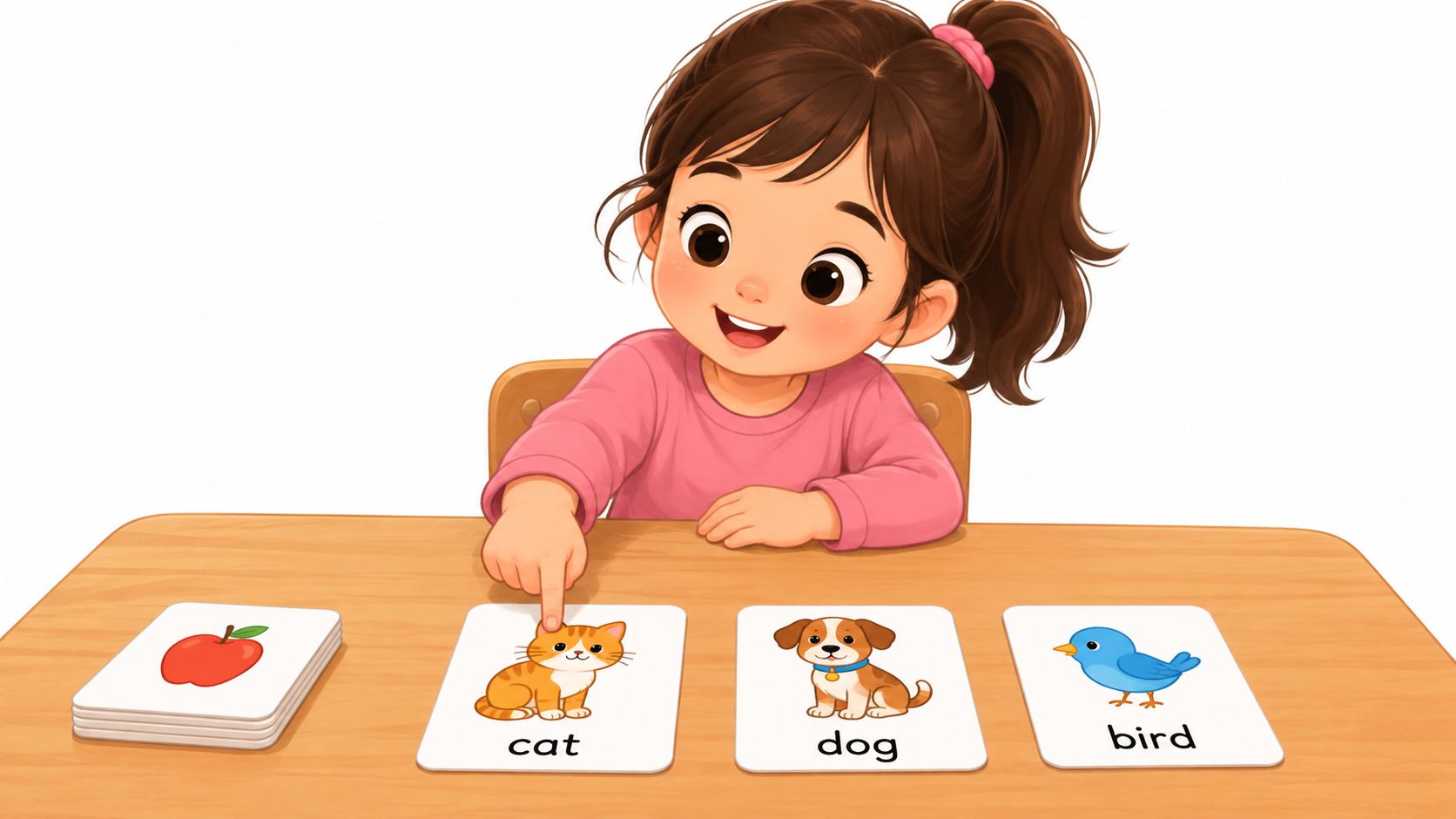
Draw familiar objects on scrap paper. A cup, shoe, dog and piece of bread are useful starting choices because their meanings can also be shown with real objects. The adult says a word, points to its picture and invites the child to repeat it.
Next, mix the cards and ask the child to find the picture after hearing its name. Written-word matching can come later; it shouldn't be the entry requirement.
Adjust the challenge, not just the card count
- Ages 5–6: Use clear drawings of familiar objects. Accept pointing before asking for a spoken answer.
- Ages 7–8: Match pictures of school equipment with objects from a school bag. Add written labels when the child is comfortable reading them.
- Ages 9–10: Let the child create cards for a chosen topic, then test a parent. Sports equipment or favourite foods can feel more suitable than nursery-style pictures.
The research idea is active recall, not just looking at pictures. Research on repeated retrieval of word forms and meanings found benefits that extended to unfamiliar pictures, suggesting learning beyond a fixed picture association.
A practical adaptation is to show a different cup after practising the cup card. Can the child recognise the same English word?
Cards are portable, but making elaborate sets can become adult homework. Rough drawings are enough. For younger learners who enjoy paper activities, these English worksheet ideas for kindergarten offer another starting point, without making worksheets compulsory.
2. Action Words with Simon Says and Total Physical Response
A child who won't say “jump” may still happily jump after hearing it. Simon Says makes that listening response part of a game rather than a spoken test.
Start by demonstrating actions such as “stand up”, “sit down”, “clap” and “touch the door”. Leave out the trick rule until the child understands the commands. Then introduce the familiar rule that an action happens only after “Simon says”.
This is an action-based approach often called Total Physical Response. The useful distinction is between understanding an instruction and producing it independently; the adult can practise these separately.
Make the child the leader when ready
For ages 5–6, the parent models each movement and allows the child to copy. Comfortable actions in a clear space matter more than speed or winning.
For ages 7–8, the child chooses the actions before play begins. Once the words are familiar, the adult can stop demonstrating so that the child responds to English rather than merely copying movement.
For ages 9–10, offer the leader's role. A beginner can give a familiar command to a parent, while a more confident learner can combine commands into a short sequence.
Understanding a command counts as participation. Speaking can be the next step rather than the price of joining in.
British Council guidance combines movement, listening stories and action songs. The practical lesson is to alternate energetic play with something calmer, not keep increasing the excitement.
For families ready to extend commands into short exchanges, these English speaking activities for kids provide related ideas.
3. Label Hunt Around the Home
A label on a door is easy to ignore. A small task involving that door gives the word a reason to be used.
Choose objects that already appear in the child's routine, such as a towel, spoon, window or school bag. Add a removable label, with a drawing if needed, and introduce a useful phrase: “Open the door” or “Find the towel”.
- Ages 5–6: Pair the label with a picture. Ask the child to find or touch the object after hearing its name.
- Ages 7–8: Let the child place labels and lead a room tour. Keep the spoken language simple even when the child reads confidently in another language.
- Ages 9–10: Invite the child to organise a label hunt for a parent or sibling. Later, remove the labels and repeat the hunt from spoken clues.
Turn exposure into a response
The research-informed distinction is recognition versus production. Seeing “door” repeatedly isn't the same task as recalling “door” when the label has disappeared.
Research on English vocabulary and the home language environment provides context for making English part of home routines. The practical adaptation here is to connect labels with listening, action and an optional spoken response.
Labels offer convenient reminders, but a house covered in unfamiliar words can become visual clutter. Keep only the words the family uses in daily life. These ideas for teaching English at home can help connect practice with existing routines.
4. Sing and Chant with Actions
Songs aren't compulsory. A child who dislikes singing may prefer a spoken chant, a desk-tapping rhythm or a deliberately silly robot voice.
Choose familiar language before adding a tune. “Clap, clap, stop” or “Sunny, rainy, windy” can become a short call-and-response routine with gestures. The adult models the words, then pauses so the child can supply a familiar ending.
Keep the words audible and meaningful
- Ages 5–6: Use body words with matching actions. Slow the delivery enough for the child to connect each word with its meaning.
- Ages 7–8: Let the child choose gestures for weather or daily actions. Alternate adult and child turns rather than expecting a solo performance.
- Ages 9–10: Offer a spoken rhythm challenge. The child can arrange known words into a weather report or sports warm-up chant.
The useful principle is repeated language with an opportunity to respond. British Council guidance on varied young-learner activities, noted earlier, includes action songs alongside listening and movement. That supports using songs as part of practice, not treating music itself as a guarantee of learning.
A practical check comes after the chant. If the child chants “windy”, can the child identify a windy scene without the music?
Keep the meaning visible: A cheerful performance isn't the same as understanding every word.
Background songs are convenient, but they don't require a response. Pausing, pointing and leaving a familiar word unfinished turns the activity into something the child can actively join.
5. Shared Reading with Picture Talk
An older English beginner doesn't need a babyish book. A book about space, animals, machines or an interesting journey can offer suitable pictures even when most of its English text is beyond the child.
The adult can talk about selected pictures instead of translating the whole page. “A dog”, “a big dog” and “Where is the dog?” are enough for a useful exchange.
The National Literacy Trust explains that reading aloud and sharing books, while allowing time for children to respond, helps vocabulary and oral-language development. The important adaptation is the pause, not an uninterrupted adult performance.
Match the book to interests and the response to English knowledge
For ages 5–6, invite pointing, gestures or animal sounds before expecting a word. A parent can model the English label after the child responds.
For ages 7–8, let the child choose an interesting picture and find named details. A book with rich illustrations can remain useful even when the child can't read its English independently.
For ages 9–10, use pictures as prompts for a simple retelling. A complete beginner might name “rocket”, “moon” and “home”, while a more confident child can add short phrases.
- For parents with limited English: Prepare a small selection of labels rather than attempting every sentence.
- For tutors: Reuse the same pictures for pointing, naming and a later retelling, adjusting support between tasks.
Repeated books offer familiarity, but repetition shouldn't mean identical questioning every time. Let the child sometimes choose what deserves attention.
6. Mystery Bag with Describe-and-Guess Clues
Place familiar, safe household objects inside an opaque bag. A scarf, spoon, soft toy or ball can work. The child feels or secretly looks at an object and gives a clue while another person guesses.
Start with words already understood. “Soft”, “red”, “big” and “round” are more useful here than a sudden collection of unfamiliar adjectives.
Make the first clue easy
- Ages 5–6: Allow the child to reveal the object, hear its English name and repeat it. Describing can wait.
- Ages 7–8: Offer a frame such as “It is soft” or “It is red”. A visible choice of describing words can reduce the burden of inventing a sentence.
- Ages 9–10: Keep the object hidden and invite clues about appearance or use. The listener can ask a familiar question such as “Is it big?”
The learning idea is moving from recognition towards meaningful spoken use. Research discussing parental support for home English learning supports structured activities and conversations rather than unspecified exposure alone. The mystery bag is a practical way to create that exchange, not a separately proven programme.
The trade-off is language load. A child may know “ball” but not yet know how to describe it.
An adult can offer a choice, model a clue or make an obvious wrong guess for the child to correct. The game should create a reason to speak, not become an examination in unfamiliar grammar.
7. Spaced Review Games with a Word Jar
A word jar gives familiar vocabulary somewhere to return. Children draw pictures or write words on scrap paper and keep the cards in a jar, envelope or small box.
During review, the adult shows a picture and waits for the word. If the child needs help, the adult supplies a clear model, invites another attempt and brings that card back sooner. Comfortable words can wait longer before their next appearance.
This is spaced retrieval: trying to remember, receiving help when needed, then trying again later. A study of spaced retrieval and children's word learning linked more successful retrievals during training with stronger later retention.
Use a different role at each age
For ages 5–6, the adult manages the cards. A child can begin by selecting a picture after hearing the word, then attempt naming when ready.
For ages 7–8, let the child sort cards into “needed help” and “remembered”. Keep the categories descriptive rather than treating them as scores.
For ages 9–10, invite more independence. The child can choose review words, record an example phrase on the back and teach a difficult word to a parent.
A remembered word should return eventually. A forgotten word needs support, not a penalty.
British Council recommendations for vocabulary games with picture cards also include removing cards to prompt recall. For tutors, a shared word bag can serve the same purpose at the beginning or end of supplementary practice.
The main trade-off is administration. If tracking cards becomes tedious, simplify the system rather than abandoning review.
8. Space Mission Role-Play for Everyday English
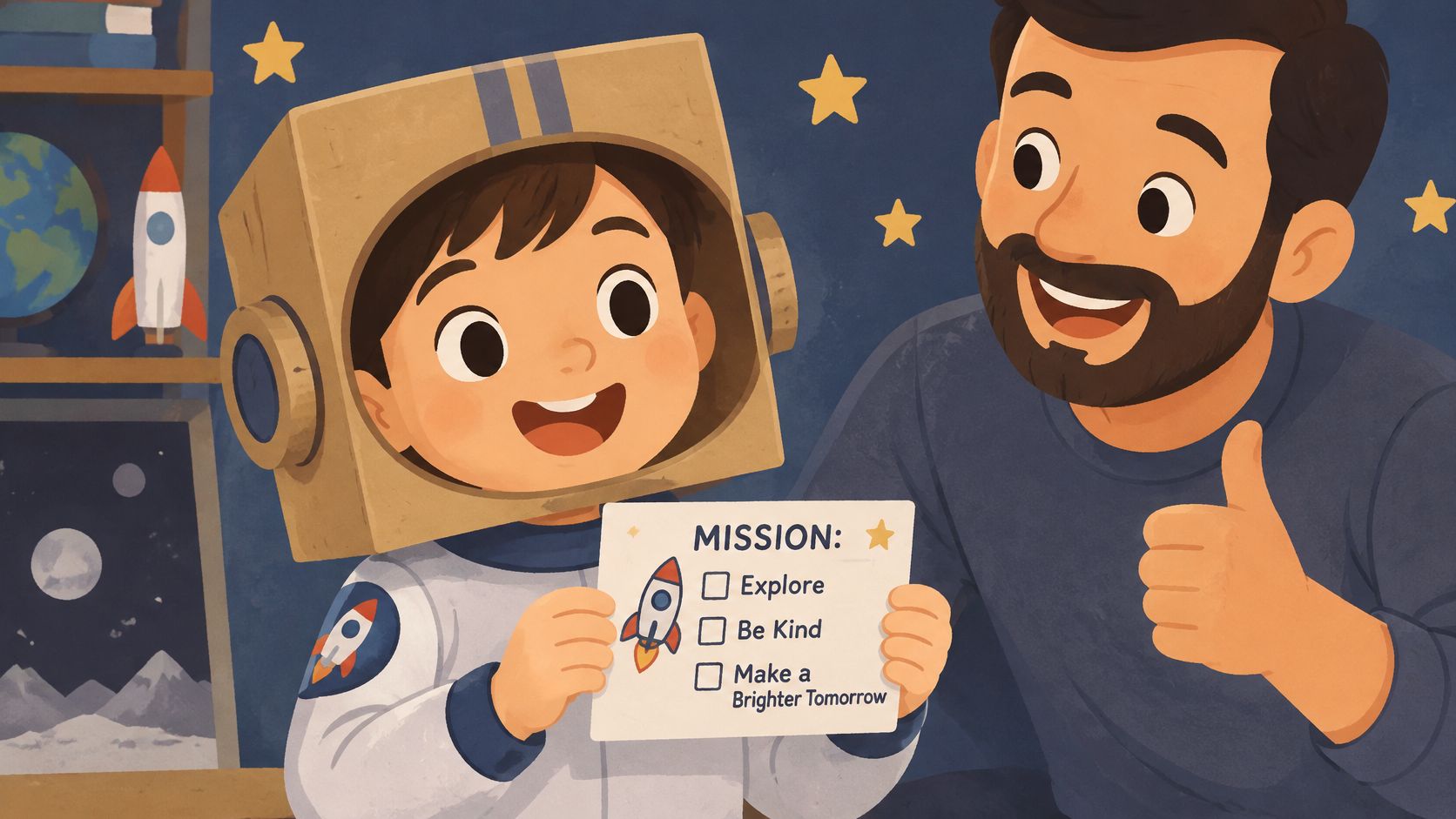
A paper circle can be a planet, and a chair can be a spacecraft. The useful language can stay everyday: “Find the red bag”, “Open the door” or “Touch the star”.
Prepare a simple mission using words the child has already encountered. Demonstrate it, complete it together, then let the child direct the adult.
Give older beginners meaningful control
- Ages 5–6: Use visible objects and a direct action. The adult narrates while the child points, carries or finds.
- Ages 7–8: Let the child design coloured planets and choose a landing destination. Naming colours becomes part of completing the mission.
- Ages 9–10: Offer the captain's role, a route map or an equipment checklist. Keep the English beginner-friendly without making the task look preschool-aged.
The research-informed idea is familiar language used in a changed context. The picture-learning research discussed earlier supports checking whether knowledge extends beyond the original teaching image. A home mission offers a practical opportunity to try familiar words with different objects and purposes, although it isn't evidence that role-play guarantees progress.
Keep the story simpler than the English task. Complicated rules can leave a parent explaining the mission instead of practising language.
For teachers or tutors, a learner can give directions while a partner moves objects. At home, the adult can take the less knowledgeable role, giving the child a genuine reason to repeat a useful instruction.
How the eight home vocabulary activities compare on materials, session length and best-fit age
| Item | Materials Needed | Session Length | Best Fit |
|---|---|---|---|
| Point, Say and Match: Picture-Word Card Games | Paper cards, drawings or photos | 3–5 minutes | Beginners, including children who cannot read yet |
| Action Words with Simon Says (Total Physical Response) | No materials needed | Flexible, brief game | Active or shy beginners learning action words |
| Label Hunt: Learning Words Around the Home | Sticky notes and a marker | Short daily game | Children learning household words through routines |
| Sing and Chant: Songs with Actions for Early Vocabulary | A simple song or rhyme | Up to 5 minutes | Young learners building listening and speaking confidence |
| Shared Reading with Picture Talk | Picture book; optional audio | Short session; under 10 minutes for younger children | Early readers and children learning through pictures |
| Mystery Bag: Describe and Guess | Bag or box and familiar household objects | Flexible, short activity | Children who enjoy guessing and practising descriptions |
| Spaced Review Games: The Word Jar | Paper cards and a jar or container | Short daily review | Children practising vocabulary recall over time |
| Space Mission Role-Play for Everyday English | Toys, drawings or cushions; mission card | Under 10 minutes | Especially suited to ages 7–10 and older beginners |
Choose One Activity This Week and Build From There
Pick the activity your child already leans toward, then run the same one for several short sessions before adding a second. A tired child may cope better with picture talk. A child who needs to move may learn more from Simon Says. Repetition is the point: the words become familiar before the format changes.
Treat the age bands as calibration. A beginner aged 9 or 10 may still need basic greetings, animals, colours, numbers, family and food, but with more choice over topic and pace. A confident reader aged 7 or 8 may still need to hear a word before seeing how English spells it.
Watch use, not finished pages:
- Recognition: Can the child find the object after hearing its English name?
- Recall: Can the child say the word without the model?
- Everyday use: Can the child use it during play, a story or a routine?
An app can supply the spoken model when pronunciation is the weak point. Talkio Kids is built for children roughly 7 to 10: short lessons pair audio with pictures, replay is one tap away, and Nox, a friendly learning companion, introduces words and celebrates effort. It works offline, keeps progress on the device, needs no child account or sign-in, and is an educational aid rather than a promise of a fixed result. New profiles need an active Talkio Kids Premium subscription before the course begins; eligible new subscribers can try the full course free for seven days.
Parents can download it through the App Store or Google Play. For the product overview, visit Talkio Kids, see explore the app download options, or find more home-practice ideas on the Talkio Kids blog.